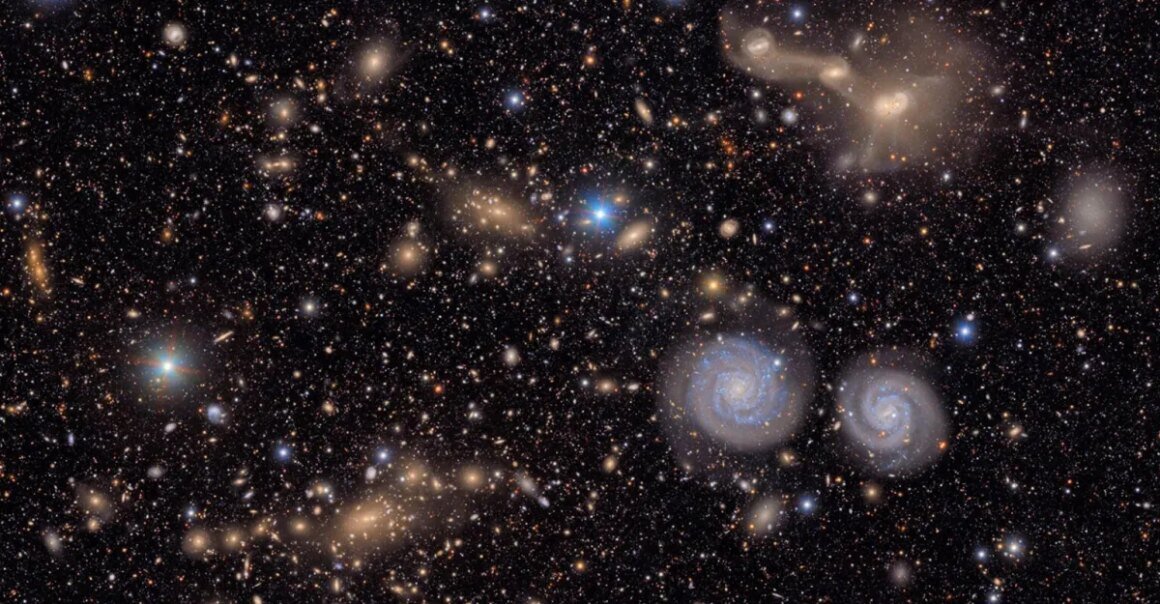

The Vera C. Rubin Observatory has launched its automated alert system, now providing astronomers with critical notifications—over 800,000 alerts in its first night alone—about asteroids, supernovas, and black holes. The system will only increase its output, potentially reaching millions of alerts each night as the observatory ramps up operations.
This development is essential for astronomers and astrophysicists who rely on timely data to observe rare celestial phenomena. As the system can filter alerts by factors like event type and brightness, it helps researchers prioritize what to investigate amidst an overwhelming amount of information. This feature particularly benefits those engaged in real-time astronomical research, allowing them to focus on fleeting events that require immediate attention.
In market context, the Rubin Observatory’s system sits within a niche sector of astrophysics and astronomy technology. Unlike traditional telescopes, which may provide extensive data over longer periods, this automated system offers near-instantaneous alerts, marking a significant evolution in astronomical observations. For research institutions and universities, the Rubin Observatory may represent a new standard for alert-based astronomy, while smaller observatories might rely on more conventional, slower data collection methods, which can miss rapid events. These traditional systems are often more cost-effective but offer limited capabilities in a fast-paced research environment.
This alert system might appeal particularly to research institutions aiming for cutting-edge results, yet individual hobbyist astronomers may find it less relevant. The high volume of alerts could lead to unnecessary complexity for those less experienced in interpreting astronomical data. These users might be better served with simpler telescopes and observation tools that require less immediate decision-making. In that sense, the Rubin Observatory’s advanced alert system is not the best fit for everyone, particularly those not involved in professional-level astronomy.
Source:
www.theverge.com