
Performance Breakthrough: Intel’s Ruixuan B390 Integrated Display Matches Xbox Series S in "Alan Wake 2"
Key Takeaways
- Impressive Performance: The Ruixuan B390 integrated display outperformed the Xbox Series S while maintaining a power consumption of 30W.
- Game Optimization: "Alan Wake 2," a demanding title, was used to benchmark performance under specific settings for a fair comparison.
- Limitations Noted: Results may vary across different games, indicating that this performance benchmark is not universally applicable.
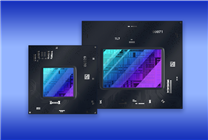
The latest findings from performance analysis experts have revealed that Intel’s Ruixuan B390 integrated display, equipped with the Core Ultra X9 388H processor, delivers remarkable gaming capabilities, particularly in "Alan Wake 2." Under a constrained power consumption of 30W, the B390’s performance is on par with the Microsoft Xbox Series S, setting a notable benchmark in integrated graphics technology.
The testing was conducted using a Lenovo IdeaPad Pro 5 notebook specifically for this performance assessment. The power parameters were locked within a 25-35W range, a standard typically observed in modern gaming handheld consoles. The choice of "Alan Wake 2," a AAA title with high hardware requirements, allowed for a compelling comparison with a fixed resolution and frame rate.
In their testing, it was observed that the Xbox Series S operates in FSR 2 balanced mode, with an internal rendering resolution of 847p and a frame rate capped at 30fps. To accommodate these performance demands, certain visual enhancements, including vegetation details and shadow quality, were subdued.
Interestingly, when the Lenovo IdeaPad Pro 5, armed with the Arc B390, was configured to operate under low image quality settings similar to the PS5 performance mode, it achieved an average frame rate of 28.5fps. This performance not only surpassed the Xbox Series S by approximately 3.9% but did so while sacrificing fewer special effects.
The analysis indicates that lifting the frame rate limits while increasing power consumption yielded an even more stable performance, yielding an average frame rate of about 29.1fps. Although this still falls short of the PS5’s output—approximately 55fps under similar settings—the Arc B390’s performance is a significant advancement over mainstream AMD Z2 Extreme chips currently prevalent in handheld gaming devices.
Digital Foundry, the testing agency, highlighted this achievement as a substantial breakthrough for integrated graphics—successfully powering a resource-intensive AAA game like "Alan Wake 2" while maintaining a modest 30W power consumption. Such performance levels challenge the conventional expectations for integrated graphics solutions optimized for gaming, notably those found in dedicated consoles.
However, there are caveats to this performance metric. The results reflect the performance of a singular title. It is essential to exercise caution in interpreting these findings as representative of all gaming experiences, as "Alan Wake 2" may exhibit varying performance characteristics on mobile integrated graphics cards. Thus, while this performance is remarkable, it’s not conclusive evidence of overall graphical superiority in every gaming situation.
In conclusion, Intel’s Ruixuan B390 displays a capacity for competitive performance in gaming environments under limited power conditions. As the gaming landscape evolves, particularly with the increasing demand for high-quality graphics on portable devices, such advancements signal exciting prospects for future gaming technology.
By focusing on integrated display advancements and their practical implications for gaming, this article aims to inform readers about the evolving capabilities of hardware while optimizing for visibility in search engines.