
AMD’s Ascendancy: A Game-Changer in AI GPUs by 2026
Summary:
- AMD is poised for a significant breakthrough in the AI graphics card market with the upcoming launch of the MI450 series and Helios solution in 2026.
- The new products may bring AMD’s performance level closer to or even surpass NVIDIA, potentially transforming its market position.
- However, AMD still faces challenges in software ecosystem development to compete effectively against NVIDIA’s established dominance.
AMD has emerged as a formidable player in the high-performance CPU and GPU sectors. Historically, the company has made impressive strides, particularly in the x86 CPU segment, where it has successfully challenged Intel, gaining ground in both consumer and server markets. However, the GPU landscape presents a more complex challenge.
For years, AMD has maintained its position as the runner-up in the GPU arena, yet the margin separating it from NVIDIA has been steadily widening. This disparity is especially pronounced in the highly lucrative AI graphics card market, where NVIDIA commands an impressive 90-95% market share, leaving AMD in a distant second place.
A Turning Point for AMD
Analysts, including TDCowen’s Joshua Buchalter, predict that AMD stands on the cusp of a significant transformation. The anticipated launch of the MI450 series AI graphics cards and its first cabinet-based AI solution, Helios, positions AMD for a potential breakthrough in 2026. Historically, AMD’s AI graphics cards have struggled to keep pace with NVIDIA’s offerings. However, the MI450 series is expected to enhance competitive parity significantly; some reports suggest that it may even outperform NVIDIA products.
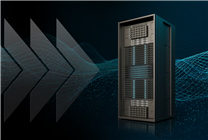
Helios, designed to accommodate up to 72 MI400 series GPUs, boasts impressive specifications, including a total bandwidth of 260TB/s. When combined with the HBM4 memory capacity of 31TB and a total bandwidth of 1.4PB/s, these figures surpass many rival offerings in the marketplace.
Performance figures are equally compelling, with a reported 1.4EFlops for FP8 performance and 2.9EFlops for FP4, illustrating AMD’s push toward matching or exceeding competitor performance metrics. AMD CEO Su Zifeng has publicly stated that Helios is anticipated to launch in 2026, promising up to a tenfold generational performance improvement, potentially positioning it as one of the world’s most powerful AI systems.
Software Ecosystem as a Challenge
While the hardware capabilities of the MI450 series and Helios are promising, AMD’s software ecosystem still poses a challenge. The company’s ROCm platform, while evolving, has yet to fully compete with NVIDIA’s CUDA in terms of performance. This gap in software maturity could hinder AMD’s ability to capitalize on its hardware advancements in the short term.
Nevertheless, with the expected release of MI450 and Helios, AMD has a unique opportunity to engage directly with NVIDIA’s products, marking a shift in its long-standing position as the perennial second.
Market Landscape and Financial Goals
Despite these advancements, AMD grapples with a significant revenue gap compared to NVIDIA. Currently, NVIDIA’s quarterly revenue stands at about $60 billion, while AMD lags with under $10 billion. The disparity in GPU revenue and profit is stark, with NVIDIA enjoying a 5-10 times lead over AMD in these areas.
AMD has publicly expressed its goals at its Q3 financial report meeting, targeting an increase in GPU market share to at least double digits, exceeding the 10% mark. The company’s aspiration to generate revenue of $60 billion in the coming years frames a challenging yet ambitious roadmap, anticipated to take up to five years to achieve.
In conclusion, AMD is at a pivotal juncture where the potential introduction of the MI450 and Helios solutions could redefine its market trajectory. If AMD successfully brings its products to market with competitive performance, it may not only challenge NVIDIA’s longstanding dominance but also invigorate its growth strategies in the coming years. With evolving products and ambitious goals, AMD’s journey toward becoming a leader in AI graphics is one to watch closely.