
Summary
- Cost-Effectiveness: The AMD Ryzen 7 9800X3D offers comparable gaming performance to the 9850X3D, making it a more budget-friendly option.
- PBO Performance Boost: Activating Precision Boost Overdrive (PBO) on the 9800X3D can significantly enhance its performance, often matching or exceeding the 9850X3D in real-world gaming scenarios.
- Minimal Differences: The performance differences between the two processors are subtle, with only a single-digit FPS advantage for the 9850X3D in most games.
Ryzen 7 9800X3D: A Smart Choice for Gamers
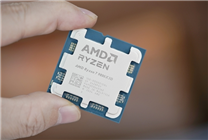
The AMD Ryzen 7 9850X3D, featuring Zen 5 architecture and 3D V-Cache technology, promises impressive gaming performance. However, recent analyses indicate that this new processor does not substantially outperform its predecessor, the Ryzen 7 9800X3D. For gamers looking to maximize their budget, the 9800X3D emerges as a highly cost-effective alternative.
Performance Insights
According to various performance tests, the Ryzen 7 9850X3D boasts a minor increase in maximum clock speed — from 5.2GHz to 5.6GHz. Nevertheless, practical testing shows that the gaming performance of the 9850X3D only edges out the 9800X3D by approximately 3.3%. This slight margin raises the question of whether the price difference justifies choosing the newer model.
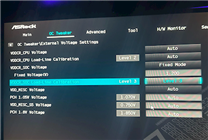
Utilizing Precision Boost Overdrive (PBO), gamers can unlock enhanced performance on the Ryzen 7 9800X3D. By allowing the motherboard to automatically manage power limits and adding a manual boost offset of +200MHz, users can achieve performance levels nearly identical to those of the Ryzen 7 9850X3D. This means that with simple settings, players can enjoy game performance that rivals AMD’s flagship processor.
Gaming Performance Comparisons
Several games serve as benchmarks to understand the differences in performance between these two processors:
-
A Plague Tale: Requiem: With PBO activated, the 9800X3D experienced a performance increase of 4.4%, even surpassing the default performance of the 9850X3D, which posted a notable rise of 7.3%.
-
Baldur’s Gate 3: The performance improvements in this title were not as pronounced, potentially due to frequency limits typically reaching 5.45GHz.
-
Counter-Strike 2 (CS2): Here, both processors, when enhanced with PBO, showed an average frame rate increase of approximately 1.5%, indicating that the gains were minimal but present.
-
Cyberpunk 2077: Known for its GPU-heavy demands, both the 9800X3D and 9850X3D performed almost equivalently, with average frequencies capped around 5.4GHz, suggesting a bottleneck situation regardless of the processor.
- Doom: Dark Age: Similar to Cyberpunk, this game also strained the GPU, where activating PBO led to minor performance improvements, but at the cost of raised power consumption and temperatures.
Conclusion: Value Meets Performance
Despite the Ryzen 7 9850X3D’s marginal lead in certain gaming scenarios, the overall differences in performance are negligible for most users. The 9800X3D, particularly when configured with PBO, narrows the performance gap significantly. In practice, even in untweaked conditions, the lead of the 9850X3D translates to only a few additional frames per second.
For gamers seeking a high-performance CPU without breaking the bank, the Ryzen 7 9800X3D presents an appealing option. Its capabilities, enhanced through straightforward adjustments, deliver a gaming experience that many may find indistinguishable from the more expensive counterpart.
This makes the 9800X3D not just a budget choice, but a strategic one, ensuring players can enjoy top-tier performance without overspending.