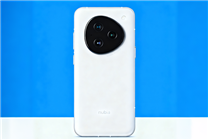

Understanding AI Mobile Assistants: The Role of User Authorization
Summary:
- User Empowerment: AI mobile assistants function based on explicit authorization from users, enhancing convenience without compromising privacy.
- Industry Response: Significant apps like WeChat and banking platforms are restricting access to these mobile assistants due to security concerns over excessive permissions.
- Technological Feasibility: Scenarios depicted in media regarding AI assistants executing complex tasks are not only possible but increasingly viable.
In the rapidly evolving landscape of technology, the functionalities of AI mobile assistants are often misunderstood. Li Liang, Vice President of Douyin, emphasizes that the essence of AI mobile assistance lies in user authorization, distinguishing it from concepts of intrusion or hacking. His insights shed light on how these assistants can transform everyday tasks without infringing on personal privacy.
The Mechanism Behind AI Assistants
The core operation of AI mobile assistants, like Doubao Mobile, hinges on the user granting explicit permissions. This advanced system facilitates seamless execution of various tasks, from ordering food to arranging transportation, with minimal user input.
For example, upon a user’s request, an AI assistant can take over the process of booking a ride to the airport. Consider this dialogue:
- User: "XX mobile assistant, please help me call a car to the airport."
- Assistant: "Okay, the vehicle will arrive at your residence in about 20 minutes."
- User: "How long does it take to get to the airport?"
- Assistant: "Currently, there is a traffic jam; it will take about 60 minutes. Taking the expressway can save you 20 minutes."
- User: "Please take the expressway and pay the fees directly."
- Assistant: "You will need to log in to complete that payment."
This interaction showcases how an AI assistant can streamline intricate tasks by harnessing multiple services and data points, including location tracking, taxi booking, and payment processing, all while being solely authorized by the user.
Security Concerns and Industry Response
Despite the convenience offered by AI assistants, concerns over permission management have led major platforms to reconsider their policies. Leading applications such as WeChat and banking apps have begun to restrict access to assistants like Doubao Mobile, citing potential risks associated with excessive permissions. This highlights an essential balancing act between innovation and safeguarding user interests.
Li Liang asserts that the design principle of AI assistants is fundamentally about empowering users through voluntary authorization. The potential for misuse, however, has prompted heightened scrutiny from the industry. As AI technology advances, the necessity for robust security frameworks becomes paramount to ensure that user data remains protected.
The Path Forward for AI Assistants
The utilization of AI mobile assistants is still in its nascent stage, yet the possibilities are extensive. Scenarios once confined to cinematic portrayals are now approaching reality, backed by substantial technological advancements. Despite facing challenges, the trajectory is clear: AI mobile assistants are set to play an integral role in our daily lives.
This burgeoning technology presents a unique opportunity to redefine user experiences. With an increasing number of applications incorporating AI, the future holds considerable promise for increasing convenience while retaining user control over personal information.
In conclusion, the development of AI mobile assistants is a testament to the capabilities of modern technology. As they evolve, these assistants will likely become indispensable tools, driven by user consent and focused on enhancing day-to-day tasks without compromising privacy.
By understanding the intricate workings and implications of AI mobile assistants, users can navigate the landscape of digital interaction with greater confidence. The conversation surrounding user empowerment and security continues to be critical, shaping the future of AI technology.