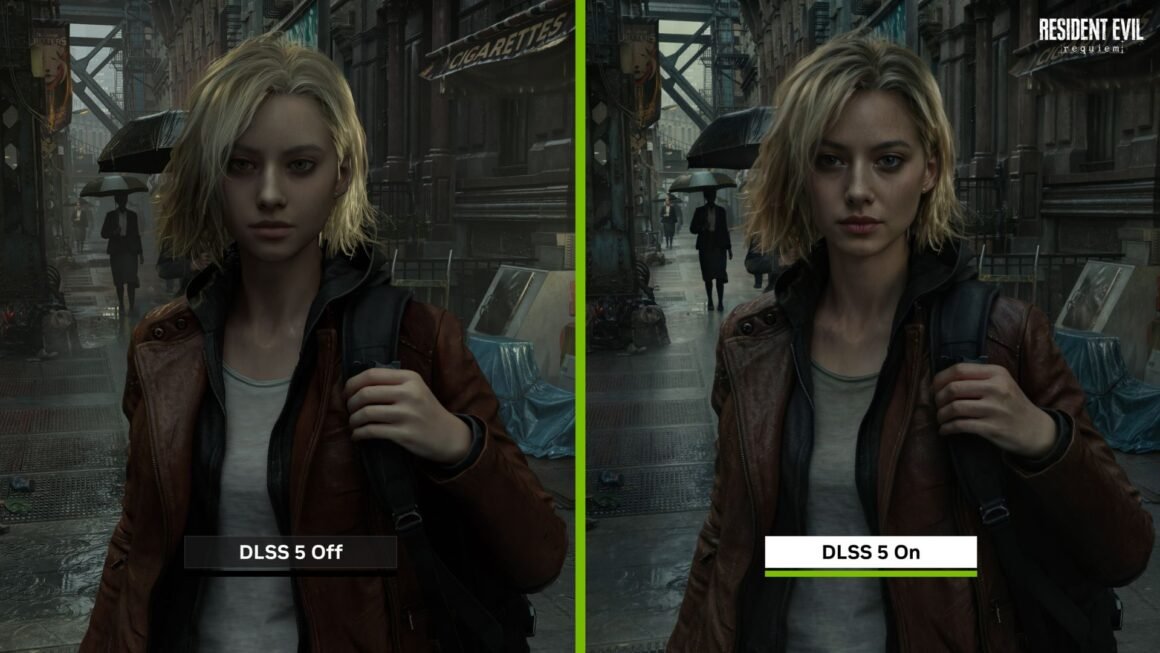

Nvidia has announced DLSS 5, its latest iteration of Deep Learning Super Sampling technology, at its recent global event in San Jose. This AI-powered feature aims to enhance visual fidelity in video games by upscaling resolutions and generating new frames in real time. The company touts DLSS 5 as a significant advancement comparable to the introduction of real-time ray tracing, promising to deliver high-quality images at up to 4K resolution.
For gamers considering new titles, DLSS 5 is a noteworthy development as it will support various high-profile games set for release this fall, including titles like *Starfield* and *Hogwarts Legacy*. While the technology claims to provide detailed aesthetic control to developers, its adoption could influence buying decisions for future gaming setups, especially for those looking to optimize performance without sacrificing visual quality. Given the prominence of Nvidia’s 3000 and 4000 series GPUs, the rollout of DLSS 5 signals a considerable push towards the next generation of gaming graphics.
In the current market, DLSS 5 enters a competitive landscape populated by brands like AMD and Intel, which offer alternative solutions for graphics enhancement. While Nvidia’s technology has been integrated into over 750 games, AMD is also progressing with its FidelityFX Super Resolution. Nvidia’s hardware, typically found at varying price points from around $300 to $1,500, allows it to cater to both budget and high-end markets. For those speculating on GPUs, understanding the benefits of DLSS 5 in conjunction with the overall cost of Nvidia cards is crucial for making informed purchasing decisions.
Ultimately, DLSS 5 is geared towards gamers who want to elevate their visual experience without compromising frame rates. However, the backlash from parts of the gaming community underscores that not everyone views this development favorably. Some gamers and developers express concern over reduced artistic control and a preference for a more nuanced design. Therefore, those who prioritize artistic integrity in gaming or who are not drawn to Nvidia’s ecosystem may benefit from exploring other graphics solutions that better align with their preferences.
Source:
www.trustedreviews.com