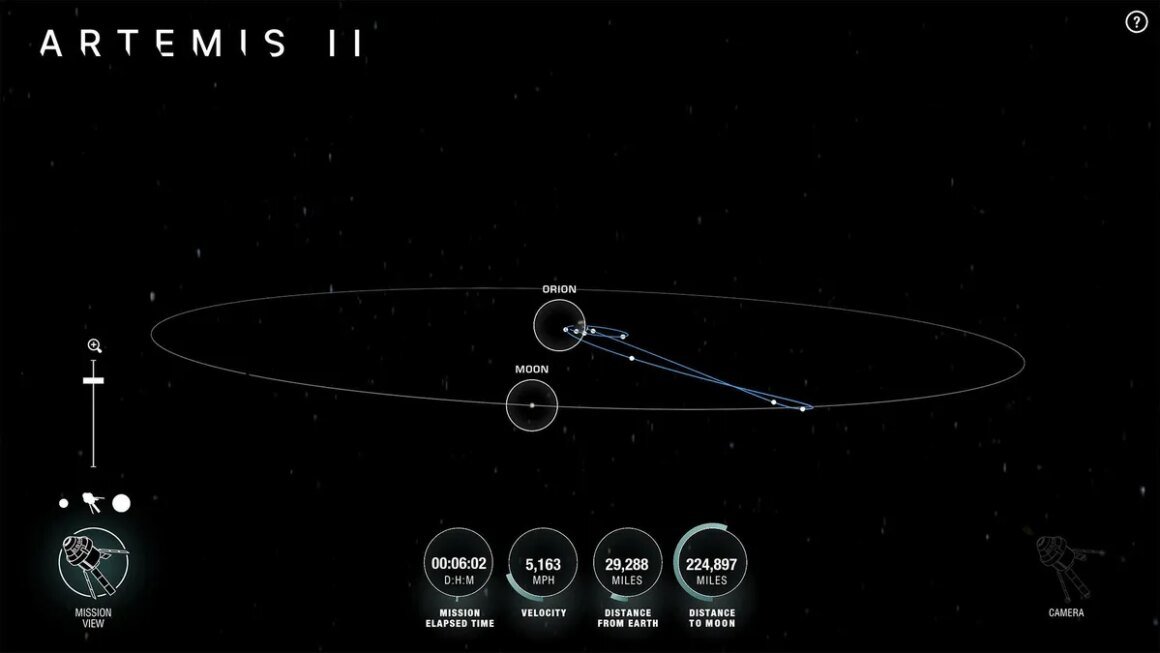

The Artemis II mission is set to launch in April 2024, marking NASA’s first crewed mission to the moon since 1972. This mission aims to advance humanity’s presence on the moon and serve as a stepping stone for future exploration, possibly including missions to Mars. Alongside this, NASA has launched the Artemis Real-time Orbit Website (AROW), allowing the public to track the mission’s progress in real-time via a web interface and mobile app.
This development holds significance for space enthusiasts and educators globally, as it offers an interactive way to engage with science and technology. The AROW tool is already available for public use, enabling anyone with an internet connection to visualize Artemis II’s journey, including its speed and distance from Earth and the moon. This tracking capability may particularly appeal to schools and educational organizations looking to inspire students in STEM fields.
Comparatively, while this isn’t a product in the usual tech consumer market, it does resonate with technologies and platforms that allow real-time tracking and data visualization. Other platforms like satellite tracking apps and augmented reality stargazing tools can offer similar experiences but focus on a broader spectrum, such as satellite positions or celestial events. However, Artemis II’s specific focus on lunar exploration may cater to those particularly interested in space science or NASA’s missions.
For those considering engagement with this mission, the AROW and its respective tools present a unique opportunity to experience the lunar program firsthand. However, it’s essential to note that the detail may not captivate everyone; individuals more interested in broader space applications or immersive gaming experiences might prefer other technologies that offer varied forms of engagement and entertainment. Thus, while Artemis II represents an exciting moment for lunar exploration, for some, it may not align with personal interests or current pursuits in technology.
Source:
www.cnet.com