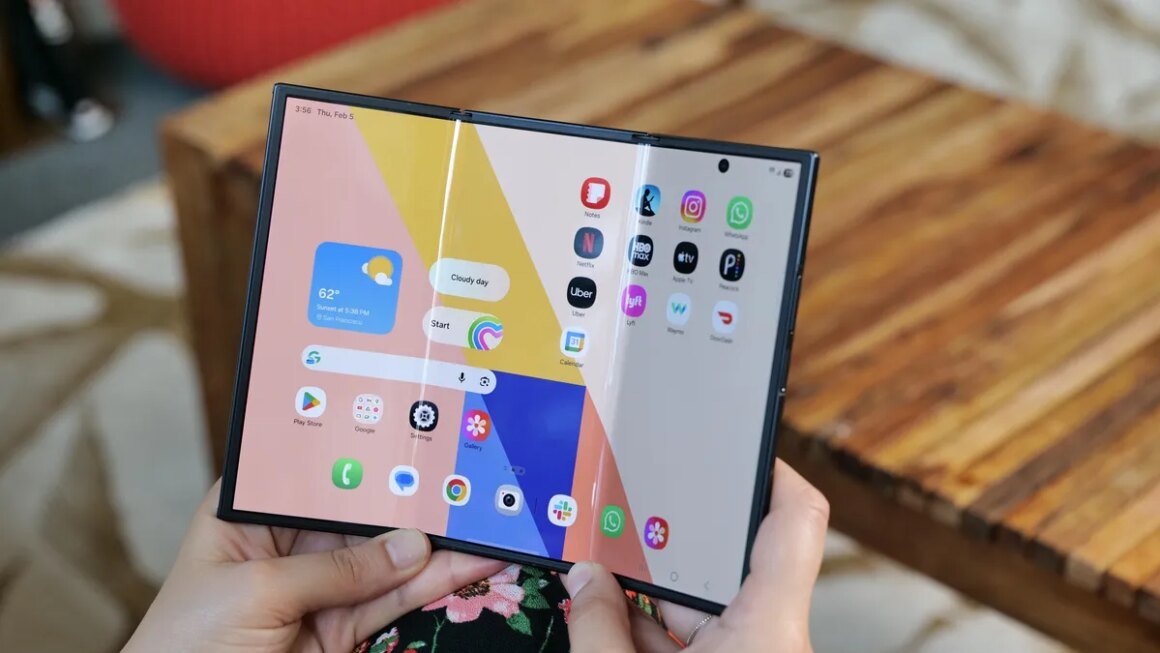

The Samsung Galaxy Z TriFold, a cutting-edge smartphone boasting a unique trifold design, is winding down its sales after less than two months on the US market, priced at nearly $3,000. Initially launched to showcase Samsung’s engineering prowess, the device quickly became popular in South Korea and the US but was never intended for mass production. As Samsung ends sales in its home market, the remaining inventory in the US will soon be depleted.
This situation matters to tech enthusiasts considering unique smartphones or those looking for alternatives in the foldable phone market. Consumers who value innovative designs and functionalities, such as multitasking and media consumption, might be particularly interested in this device. However, due to its limited availability, potential buyers in the US may need to act swiftly to secure one, either online or in specific Samsung Experience Stores.
In terms of market context, the Galaxy Z TriFold is priced at the higher end of the spectrum, reflecting its novelty. Competing devices like the Huawei Mate X2 and the Oppo Find N offer foldable experiences at various price points, with the latter generally being more affordable and providing a more traditional folding mechanism. While the Mate X2 is not available in the US, it has garnered attention for its design and performance internationally, making it worth considering for buyers open to non-US options.
Ultimately, the Galaxy Z TriFold is an interesting choice for those who prioritize innovative technology and are willing to invest. However, its high price tag and the potential scarcity of units lead to a clear consideration: buyers looking for value may find more suitable options in established foldable devices like the Oppo Find N or even high-end traditional smartphones that perform reliably at a lower cost. For those who do not see the need for a trifold feature and prefer functionality over novelty, it may be wise to explore other alternatives.
Source:
www.cnet.com