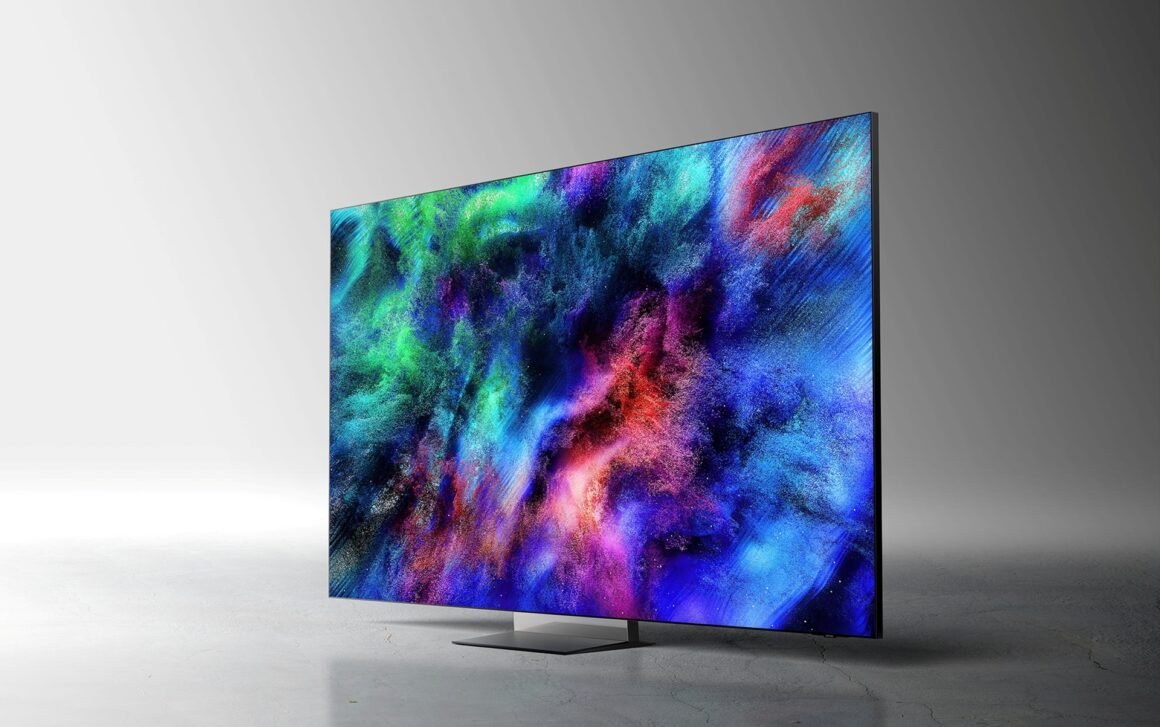

Samsung is revisiting the development of true QNED display technology, which aims to be a significant advancement over existing display options.
This new phase of QNED, short for Quantum dot Nanorod Emitting Diode, could affect buyers looking for innovative display technologies in upcoming TVs. Unlike existing QNED-branded products that rely on traditional LCD layers, Samsung’s approach allows each pixel to emit its own light using blue nanorod LEDs and quantum dots. The implications for potential buyers center around the promise of better brightness and efficiency, although a timeline for commercial products is currently undefined.
In the current landscape, options like OLED, QLED, and traditional LCDs dominate the market. Samsung’s renewed effort with QNED positions it as a future competitor to OLED, which currently leads in picture quality but can be expensive, generally ranging from $1,000 to over $3,000 for larger models. In addition, existing QLED TVs typically command prices from $600 to $2,500. The proposed QNED displays may be offered at a more accessible price point if production is efficient, but specific pricing remains unspecified as development is in its early stages.
For those contemplating a new television purchase, it’s essential to consider what you value most. If you’re after top-tier picture quality and don’t mind the premium, OLED remains appealing, while QLED presents a balanced mix of performance and affordability. On the flip side, Samsung’s emphasis on QNED could result in better options down the line, particularly in terms of manufacturing costs and display reliability. However, if you’re looking for a purchase right now, the uncertainty surrounding QNED’s release poses a risk. Coupled with the existing reliable alternatives, you might prefer to opt for OLED or QLED for their proven performance.
Source:
www.trustedreviews.com