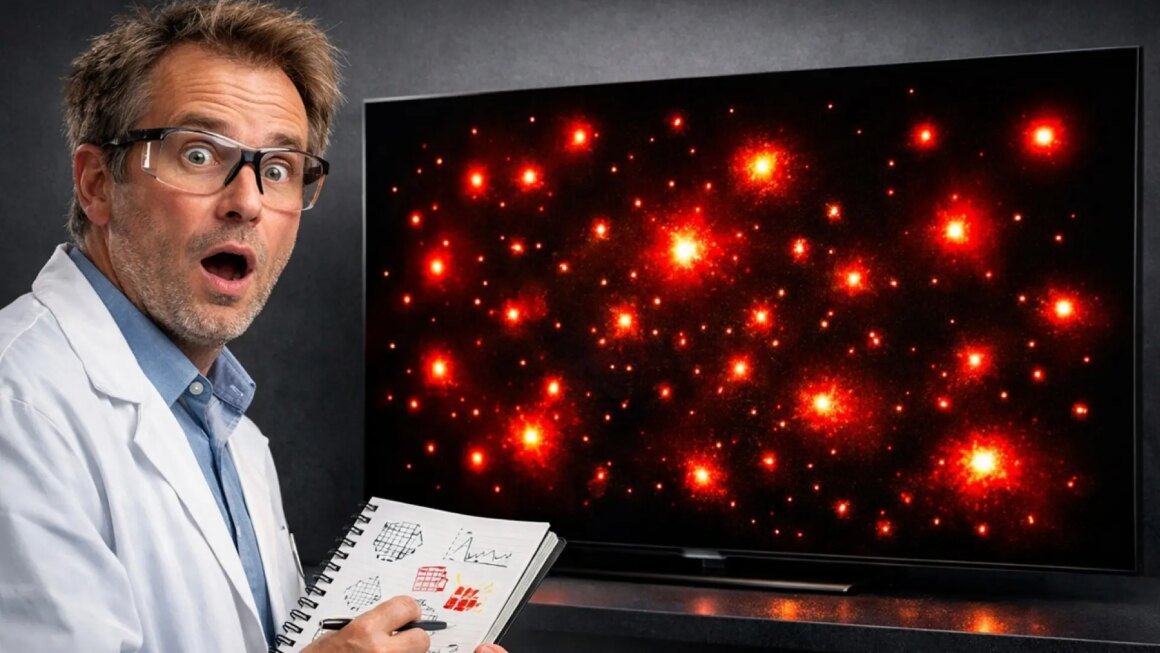

Recent research from the University of Michigan suggests that OLED screens, while favored for their impressive visual quality in products like TVs and smartphones, may have significant longevity issues due to the presence of what are termed “hotspots.” These hotspots are microscopic areas within the pixels where light and electrical current concentrate unevenly, potentially leading to premature degradation of the screen’s performance.
This finding is particularly relevant for anyone considering purchasing a new OLED TV or smartphone, as it raises concerns about the long-term viability of these devices. Consumers attracted to the vivid colors and sharp images provided by OLED technology might need to think twice about their investment, especially if they plan to use these devices for extended periods. While OLED screens are available globally, this issue may sway potential buyers toward older technologies, like LCD or LED, which may be more durable over time.
Currently, OLEDs sit at a premium price point, generally ranging from $1,000 for entry-level models to well over $3,000 for high-end options. On the other hand, alternatives like QLEDs or standard LED LCDs offer comparable image quality at lower prices, usually between $600 and $1,500. While these displays may not provide the same depth of color as OLEDs, they are often regarded as more reliable choices, particularly for those who use their screens intensively.
In conclusion, potential buyers should consider their specific needs and usage patterns before purchasing an OLED device. If peak visual performance is the priority and the user is willing to accept potential lifespan issues, an OLED could be a good fit. However, for those who prefer durability and consistent performance over an extended period, opting for a QLED or an older LCD model might be the better choice. This consideration is especially pertinent for buyers who do not upgrade their devices frequently, as they may find that OLEDs do not hold up as well over time compared to their alternatives.
Source:
computerhoy.20minutos.es