
Understanding the Current DIY Gaming PC Market: Navigating Choices with Budget Constraints
Key Takeaways
- DDR5 Memory Pricing: Prices for DDR5 memory have skyrocketed, prompting many users to reconsider their hardware choices.
- Platform Longevity: Opting for newer platforms (DDR5) will ensure better performance and future upgradeability compared to older ones (DDR4).
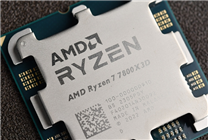
- Gaming Performance: The AMD Ryzen 7 7800X3D showcases superior gaming performance compared to its Intel counterpart, making it a worthy investment for serious gamers.
In today’s DIY gaming PC market, the soaring prices of memory and components have consumers reconsidering their hardware choices. With a budget of 4,000 yuan, many gamers are questioning what they can realistically afford.
The Current Pricing Landscape
Currently, the prices of both DDR4 and DDR5 memory have risen significantly. For context, while DDR5 memory has surged by a staggering 400-500%, the price of DDR4 memory has also escalated by 200-300%. For instance, a 16GB DDR4 3200 module from major brands now costs over 800 yuan, while a dual-channel 32GB configuration exceeds 1,600 yuan. Although second-hand options might appear enticing, they often lack reliability and guarantees.
Understanding Memory Choices: DDR4 vs. DDR5
Many users are gravitating towards the DDR4 platform due to the shocking prices of DDR5 memory. However, this may be short-sighted. Major manufacturers like Samsung and Micron have redirected their production lines entirely to DDR5 and HBM, effectively limiting DDR4 supply and subsequently driving costs even higher.
Critically, the performance disparities between DDR4 and DDR5 are pronounced. DDR5’s bandwidth and latency characteristics allow it to outperform DDR4—even in single-channel configurations. With titles in the AAA gaming category becoming increasingly demanding, a DDR4 setup may struggle to keep pace.
Future-Proofing Your Investment
Investing in DDR4 now could lock you into obsolete technology. AMD’s Ryzen 9000 series and Intel’s Ultra 200S series have moved away from DDR4, making future upgrades cumbersome. To optimize gaming performance today and in the coming years, investing in DDR5 alongside a compatible processor is advisable.
Moreover, a common misconception is that dual-channel memory is obligatory for optimal performance. While this is generally true for many CPUs, AMD’s X3D series processors mitigate the need for dual-channel memory. The addition of a 96MB cache via 3D V-Cache technology significantly enhances performance, even with a single memory module.
Performance Comparison: Ryzen 7 7800X3D vs. Intel Core i5-14600K
When comparing platforms, the Ryzen 7 7800X3D with 16GB of DDR5 memory shows notable performance advantages against the Intel Core i5-14600K with 16GB of DDR4 memory. Benchmarks across popular titles—like "CS2," "Cyberpunk 2077," and "Forza Horizon 5"—demonstrate a clear edge for the Ryzen setup.
The following points were observed in performance metrics:
- Frame Rates: The AMD Ryzen 7 7800X3D consistently delivers higher frame rates in tests, especially in demanding games.
- Stability: Game performance remains stable, even under challenging conditions, making it an excellent choice for high-performance gaming.
- Future Upgrades: With DDR5, the Ryzen setup retains compatibility with future hardware advancements, positioning users for longer-term satisfaction without recurrent expenses.
Cost Analysis and Value
The price differential between the Ryzen 7 7800X3D and Intel platforms currently stands at about 560 yuan, primarily due to the higher pricing of DDR5 memory and the CPU itself. However, the performance benefits afforded by the Ryzen processor justify this additional cost. Furthermore, as DDR4 platforms become increasingly rare, sourcing an affordable motherboard may also become challenging.
Conclusion: Making an Informed Decision
Given the current landscape, investing a little extra in a platform that prioritizes DDR5—such as the Ryzen 7 7800X3D—is a prudent decision for gamers committed to quality performance and longevity. While a 4,000 yuan budget may fall short of acquiring a fully-fledged console or high-spec PC, it’s critical to balance immediate costs against long-term savings and upgraded performance.
If budget constraints are severe, a temporary shift to DDR4 could be feasible, but be wary of compromised performance and upgrade limitations. Ordinary users are ultimately encouraged to consider the long-term advantages of investing in a more capable platform—ensuring a superior gaming experience without the pitfalls of obsolescence.