
Summary
- Emergence of HBF: Next-generation High Bandwidth Flash Memory (HBF) could surpass High Bandwidth Memory (HBM) in market size within a decade, driven by the growing demand for AI capabilities.
- Strategic Insights: Industry leaders, particularly from South Korea, are strategically positioned to lead in HBF development due to their existing technology and production capabilities.
- Future of AI Computing: As AI evolves, memory capacity will be paramount; HBF’s role as a long-term memory solution will be critical in AI’s new era.
The Future of Memory Technology: HBF Set to Surpass HBM
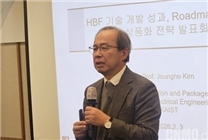
In a recent briefing held in Seoul, Professor Kim Jeong-ho from the Korea Academy of Science and Technology (KAIST) made a compelling assertion regarding the future of memory technology. He noted that High Bandwidth Flash Memory (HBF), a next-generation NAND flash memory product expected to hit the market next year, is poised to exceed the market size of High Bandwidth Memory (HBM) within a decade. This shift underscores a significant transformation in the landscape of AI semiconductors.
The Role of Memory in AI Advancements
As AI’s capabilities, particularly in thinking and reasoning, become increasingly prominent, the data requirements are expected to grow exponentially. Professor Jin emphasized that while the central processing unit (CPU) has defined the PC era and low power has been key for smartphones, the heart of the AI era will rest on memory itself. He stated, "HBM determines speed, and HBF determines capacity," highlighting the crucial roles these memory technologies will play.
HBF is distinguished by its ability to significantly enhance storage capacity through vertical stacking of NAND flash memory, a technique reminiscent of HBM. As AI agent services proliferate, the importance of “key-value” (KV) cache memory—serving as long-term memory—has been brought to the forefront. This marks a pivotal shift, with NAND memory gradually assuming the historical role once filled by HBM.
Innovative Memory Architectures
During the briefing, Professor Jin showcased advancements using HBF in next-generation memory architectures. He illustrated a solution that combines HBM and HBF, utilizing four HBM modules alongside HBF around a GPU to achieve an impressive total of 96GB of HBM capacity along with 2TB of HBF capacity. To provide a visual analogy, he likened HBM to a bookshelf—allowing for immediate access to essential information—while HBF serves as a more extensive library—able to store vast amounts of information, albeit at a slower retrieval speed.
Anticipating Industry Changes
Professor Jin predicted that HBM alone will struggle to meet the explosive demand anticipated in the coming years. As the integration of memory-centered computing (MCC) architecture—a design that harmonizes CPU, GPU, and memory on a single chip—comes to fruition, the need for HBF will intensify. His forecasts suggest that demand for HBF will eclipse that of HBM by 2038.
Leading global companies, including Samsung Electronics, SK Hynix, and SanDisk, are investing heavily in the development of HBF, positioning themselves at the forefront of this technological evolution. Professor Kim posited that South Korean firms hold a competitive edge, with Samsung and SK Hynix offering both HBM and advanced packaging capabilities, as opposed to SanDisk’s narrow focus solely on NAND flash.
Looking Forward
The anticipated evolution of AI computing has significant implications for the memory industry. Professor Kim remarked, "South Korea is poised to spearhead the development of AI computers over the next 10-20 years, with HBF as a cornerstone." Reports indicate that SK Hynix aims to achieve mass production of HBF by next year.
In conclusion, Professor Kim asserted that the processes for HBF mirror those of existing HBM, suggesting that competition will become a race of technological speed. The pivotal question for achieving full commercialization will be which services will adopt HBF. He urged Korean memory manufacturers to take the initiative in the HBF domain to maintain their influence in the burgeoning AI market. We are on the cusp of a memory-centered AI era, setting the stage for transformative advancements in computing technology.
Conclusion
As the demand for advanced memory solutions surges in the AI landscape, HBF is not just an innovation—it’s a potential game-changer. The strategic positioning of South Korean companies combines technological prowess with market foresight, placing them at the helm of this exciting evolution. The next decade will likely reveal the true capability of HBF, profoundly impacting how data is stored and processed in the AI age.