Summary
- Apple Achieves Market Leadership: For the first time, Apple outpaces Samsung to capture a 20% share of the global smartphone market in 2025, driven by strong sales of the iPhone 17.
- Driving Factors for Market Growth: Key drivers include increasing demand for high-end devices, improved performance in emerging markets, and preemptive manufacturing adjustments by OEMs.
- Future Outlook: Challenges ahead include component shortages and rising costs, which may affect global shipment forecasts for 2026.
Apple Leads the Global Smartphone Market Amid Shifting Trends
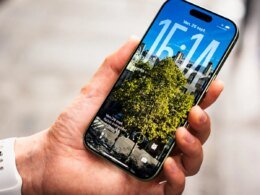
Research reveals that the global smartphone market is poised for a modest yet significant growth of 2% year-on-year in 2025, marking its second consecutive year of expansion. Apple is at the forefront, having secured a remarkable 20% market share and achieving a year-on-year growth rate of 10%. This milestone positions Apple as the leading brand in global smartphone shipments, surpassing Samsung for the first time and reshaping a decade-long market hierarchy.
The anticipated growth in the smartphone sector is attributed to three primary factors:
-
High-End Device Demand: There is a significant surge in consumer willingness to upgrade to premium devices. Enhanced financing solutions and targeted marketing strategies are further incenting consumers to gravitate toward higher-priced segments.
-
Emerging Market Momentum: Key developing markets are exhibiting robust performance, particularly with rapid adoption of 5G technologies, acting as a pivotal growth driver.
- Manufacturing Strategies: Manufacturers proactively shipped devices ahead of potential tariff implementations, but the overall impact of these tariffs proved minimal, allowing for stable sales in the latter half of the year.
Regional growth exhibits notable disparities. While Japan, the Middle East, Africa (MEA), and certain Asia-Pacific markets thrive, mature regions like Europe and the United States underperform.
Quarterly Insights and Brand Performance
In the fourth quarter of 2025, global smartphone shipments experienced a slight year-on-year increase of 1%, largely due to earlier inventory backlogs. Nevertheless, Apple reported outstanding performance, commanding an impressive 25% share of global shipments during this period—its highest quarterly share to date. Samsung follows with a 17% market share, demonstrating resilience despite the competitive landscape.
Apple’s growth trajectory is fueled by its diversified product strategy. The iPhone 17 series has garnered significant market interest, while previous models like the iPhone 16 enjoy continued success in regions such as Japan, India, and Southeast Asia. Furthermore, Apple’s strategic enhancements in emerging markets are catalyzing a surge in demand for replacement devices, an effect magnified as consumers resume upgrades that were postponed during the pandemic.
The iPhone 17 standard variant has adopted an appealing strategy of "enhanced features without increased price," achieving nearly double the sales of its predecessor.
Competitor Landscape
Samsung maintains its position as a close second with a 19% market share and a year-on-year growth rate of 5%. The Galaxy A series remains a strong performer, while flagship models like the Galaxy Fold 7 and S25 series also execute well. However, challenges in Latin America and Western Europe hindered Samsung’s ability to reclaim its leading position.
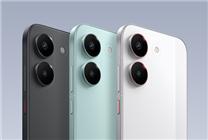
Xiaomi ranks third with a steady 13% share, successfully navigating industry challenges through a focus on high-end offerings and a balanced assortment of both flagship and mid-range products. Vivo holds fourth place, benefiting from advantageous offline channels in India and a streamlined product lineup.
Moreover, brands like Nothing and Google, though outside the top five, delivered noteworthy growth rates of 31% and 25%, respectively, emerging as significant contributors to the market’s evolution.
Market Outlook for 2026
Looking ahead to 2026, market analysts adopt a conservative viewpoint. Complications arise as chip manufacturers increasingly allocate production resources toward AI data centers, leading to shortages in DRAM and NAND storage, ultimately driving up component costs. This trend is anticipated to result in a rise in smartphone prices, prompting a revision downward of the global shipment forecast by 3%.
Experts project that while Apple and Samsung benefit from robust supply chain capabilities and strong positioning in the premium market, Chinese OEMs focusing on budget segments may face intensified pressures.
Conclusion
Apple’s ascendancy to market leadership underscores the importance of a highly strategic product approach and the timely release of enhanced offerings. The ongoing dynamics in the high-end smartphone sector, coupled with 5G advancements, reinforce the competitive landscape’s complexity. As the industry grapples with supply chain challenges in 2026, the race within the premium segment will likely become even more acute.