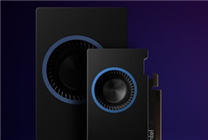

Intel has officially confirmed the launch of its new Arc Pro B70 and B65 graphics cards on March 25. These graphics cards are based on the Battlemage BGM-G31 GPU and are designed specifically for the workstation market. The Arc Pro B70 features 32 Xe2 cores, 32GB of ECC GDDR6 memory, and a configurable power consumption ranging from 160W to 290W, with a reference design set at 230W. The Arc Pro B65 will also offer 32GB of ECC memory but comes with 20 Xe2 cores and a fixed power setting of 200W.
This announcement is significant for professionals in industries such as design, video editing, and 3D rendering, who require robust graphical capabilities. While exact pricing has not yet been released, the product launch is noteworthy as it adds to the competitive landscape of workstation GPU offerings. Those currently looking to upgrade their workstation setups or build new ones may find this particularly relevant, as the release suggests that Intel is increasing its focus on that segment.
In terms of market context, the Arc Pro B70 is positioned against existing professional-grade graphics solutions such as NVIDIA’s RTX A4000 and AMD’s Radeon Pro W6800. These alternatives have proven their worth in heavy computation workloads, but typically at a higher price point. The RTX A4000, for instance, tends to retail around $1,000. On the other hand, if budget constraints are a factor, lower-tier options like the NVIDIA GeForce GTX 1660 may appeal to those who don’t need ECC memory or ultra-high performance, but these may lack the computational capabilities required for extensive workstation tasks.
Ultimately, the Arc Pro B70 and B65 could be a strong option for users needing reliable workstation performance, particularly in sectors that capitalize on large memory capacities and ECC features. However, buyers should consider that the availability and pricing specifics can significantly influence their decision. For users looking for more established alternatives, it may be prudent to explore existing offerings from NVIDIA and AMD that have a proven track record in the workstation domain. These alternatives could offer better support and availability, making them a viable choice for those who prioritize reliability in their purchasing decisions.
Source:
news.mydrivers.com