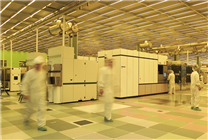

India’s Ambition to Emerge as a Global Semiconductor Hub
Summary:
- India has successfully designed a 2nm chip, a significant achievement in its quest to become a global semiconductor center.
- Qualcomm’s R&D centers in India played a crucial role in this achievement, showcasing the country’s engineering capabilities.
- Despite recent advancements, experts acknowledge that India still has a long journey ahead to establish itself as a semiconductor powerhouse.
India is intensifying its efforts to become a premier destination in the global semiconductor landscape, recently announcing a significant milestone: the successful tape-out of a 2nm chip design. This development represents a critical step forward in its ambition to catch up with market leaders like China in the semiconductor sector, particularly in mobile phone, automotive, and chip technologies.
The Role of Qualcomm
Qualcomm Technologies, a global leader in semiconductor design, revealed its key involvement in this breakthrough. The completion of the 2nm semiconductor design not only underscores Qualcomm’s engineering prowess but also exemplifies the effective collaboration among its research and development centers located in Bengaluru, Chennai, and Hyderabad. This trio of locations has evolved into one of Qualcomm’s largest and most advanced engineering teams outside the United States.
According to Shahi Reddy, Qualcomm’s Senior Vice President of Engineering, the contributions from the Indian R&D centers span multiple dimensions of system design. "From architecture to implementation, and from software platforms to use case optimization, our centers are making vital contributions," he stated. This robust engineering foundation is crucial as India seeks to build a sustained semiconductor industry.
Strategic Government Support
India’s governmental bodies, including the Ministries of Railways, Information and Broadcasting, and Electronics and Information Technology, have expressed strong support for the semiconductor initiative. They emphasize that an increasingly mature design ecosystem, combined with ongoing industry collaboration, is vital for India’s semiconductor mission. Investments in advanced engineering and R&D capabilities are essential for establishing a long-term, locally-based semiconductor manufacturing capacity.
Challenges Ahead
Despite these promising developments, industry analysts note that India faces considerable challenges in solidifying its position in the semiconductor sector. While the recent achievements are commendable, they also highlight the nation’s current limitations and the extensive work needed to become a true chip powerhouse. India’s semiconductor ecosystem must continue to grow, attracting more investment and fostering talent to compete effectively on a global scale.
The rapid pace at which the semiconductor landscape is evolving underscores the necessity for India to harness its engineering talent, foster innovation, and build strategic partnerships. By doing so, India has the potential to not only advance its technological capabilities but also to play a significant role in the global supply chain.
Conclusion
As India takes these important steps towards becoming a global semiconductor center, the successful tape-out of the 2nm chip is a testament to the country’s resolve to advance in this critical technology sector. The collaboration with industry leaders like Qualcomm highlights the potential of India’s engineering capabilities. However, as the nation celebrates these milestones, it must also remain cognizant of the long journey ahead, filled with both challenges and opportunities.
Call to Action
For those interested in the future of technology and innovation, following India’s semiconductor journey offers valuable insights into how nations can position themselves in the ever-evolving tech landscape. The continued evolution of India’s semiconductor industry will be closely watched as it seeks to establish itself as an essential player in the global market.
This article captures the essence of India’s current standing in the semiconductor industry while optimizing it for search engine relevance and audience engagement, ensuring a coherent and professional tone throughout.