



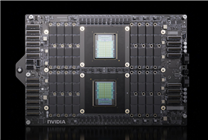

NVIDIA recently launched the Vera CPU, a product designed specifically for AI applications and reinforcement learning. This CPU boasts doubled efficiency compared to traditional CPUs and 50% faster speeds, positioning it as a notable entrant in the CPU market. This announcement came during the GTC conference, where NVIDIA also showcased other AI products, including the Rubin GPU.
This development is particularly significant for those involved in AI and machine learning, as the Vera CPU aims to address the needs of this evolving landscape. The CPU’s emphasis on single-thread performance and high input/output capabilities suggests that it will cater to high-demand environments. While availability details are still unfolding, the intention is to create a CPU that balances traditional capabilities with modern requirements.
In terms of market context, NVIDIA’s Vera CPU enters a highly competitive arena dominated by established players like Intel and AMD. Traditional CPUs are optimized for large-scale cloud services, typically favoring multiple cores over single-core strength. Alternatives to the Vera include Intel’s Xeon series and AMD’s EPYC line, which are well-regarded for their multi-core efficiency but may not provide the same level of specialized performance for AI tasks as NVIDIA proposes. Thus, while priced competitively, the Vera CPU offers a distinct focus that sets it apart from its competitors.
While the Vera CPU might be appealing for organizations prioritizing AI workloads, those looking for a straightforward, high-performance CPU for general computing may want to explore other options. If you’re primarily working with applications that do not leverage AI enhancements, established alternatives like Intel or AMD might meet your needs more effectively. The potential for the Vera CPU to excel remains, but it may not yet be suitable for every type of user.
Source:
news.mydrivers.com