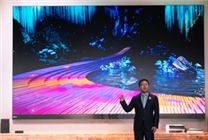

Hisense Unveils Next-Gen RGB-Mini LED TV: A Leap in Visual Technology
Summary:
- Hisense’s latest RGB-Mini LED TV showcases cutting-edge image quality technology, promising vivid colors and reduced energy consumption.
- The new model incorporates a unique four-core backlight system and an advanced AI image quality chip for enhanced performance.
- Launching in the Chinese market in March 2026, the TV is set to redefine home entertainment with professional-grade display capabilities.
Introduction
At the CES 2026 exhibition, Hisense has boldly claimed its position as a global leader in display technology by introducing a new generation of RGB-Mini LED TVs. With significant advancements in color accuracy and energy efficiency, this cutting-edge television promises to deliver a viewing experience akin to professional-grade monitors.
Major Technological Advancements
Hisense’s RGB-Mini LED TV is distinguished by three groundbreaking improvements:
1. Innovative 4-Core True Color Backlight
The new model features a sophisticated four-core backlight system, which includes a newly developed azure self-luminous chip in addition to the conventional red, green, and blue light-emitting chips. This advancement results in an expanded color gamut of 110% BT.2020, surpassing the top configurations of QD-Mini LED by 10% and QD-OLED by 18%. Moreover, the color volume achieves an industry-leading 100%, ensuring that visuals appear brilliantly vibrant and true-to-life.
2. Advanced Xinxin AI Image Quality Chip H7
Hisense’s proprietary Xinxin AI image quality chip H7 has been significantly upgraded to provide exceptional color control, achieving 134 bits of accuracy. This enhanced performance allows the TV to distinguish between hundreds of billions of color variations, delivering superior color saturation and detail even in both darker and brighter scenes.
This technology effectively addresses previous limitations found in OLED TVs regarding color expression at medium brightness and over-saturation of bright hues in high-brightness conditions. The result is a seamless experience that retains high color intensity across various luminosity levels, combining full brightness with an extensive color range.
Additionally, improvements in light source and control chip technologies have enabled the RGB-Mini LED TV to reduce harmful blue light exposure by 60% compared to QD-OLED and 75% in relation to traditional QD-Mini LEDs. Energy consumption is also decreased by 30%, marking a significant leap in sustainability.
3. Enhanced Color Management System
To fully harness the potential of its RGB-Mini LED technology, Hisense has implemented a comprehensive full-link color management system. This system utilizes professional-grade 3D LUT (Look-Up Table) technology and offers features like a light and shadow magic console for precise end-to-end color management and calibration.
Market Launch and Future Prospects
The flagship model equipped with the innovative four-core color backlight is set to debut in the Chinese market in March 2026. Industry analysts predict a surge in demand for RGB-Mini LED technology, with global shipments expected to reach 500,000 units, reflecting rapid growth and investment from leading brands.
Conclusion
Hisense’s commitment to innovation in the RGB-Mini LED TV arena not only positions it as a significant player in the display technology industry but also enhances the viewer’s experience, bringing professional-grade visual effects into the comfort of home. With the advancement of color accuracy, brightness control, and sustainability, the future of home entertainment looks brighter than ever.
By emphasizing cutting-edge technology and innovative design, Hisense’s new RGB-Mini LED TV stands poised to redefine consumer expectations, making it an exciting addition to the home entertainment landscape. Stay tuned for more updates as we approach the launch date in March 2026.