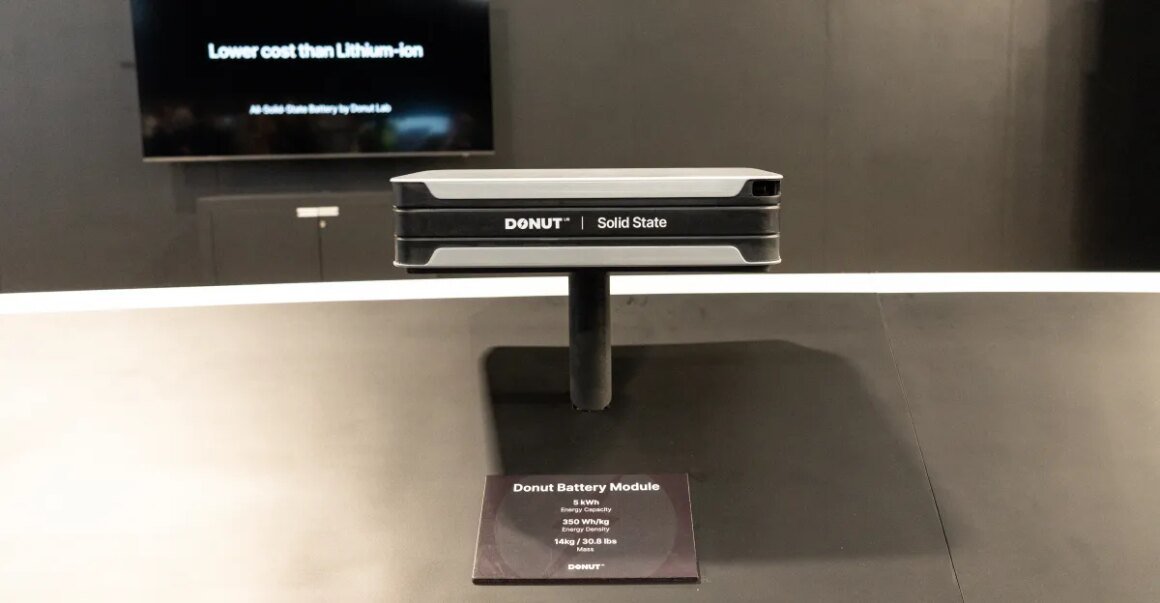

Donut Lab’s new solid-state battery has shown promising results in recent tests conducted by a Finnish research facility. The battery can operate at extreme temperatures of up to 100 degrees Celsius (212 degrees Fahrenheit) and not only continues to function but even gains capacity, outperforming traditional lithium-ion batteries that struggle under similar conditions.
This development is particularly relevant for consumers interested in electric vehicles (EVs) and energy storage solutions. As the demand for more efficient and safer battery technologies increases globally, this solid-state battery presents a potential alternative to the conventional lithium-ion technologies currently predominant in the market. Consumers who live in hotter climates or who are looking for more reliable battery performance under extreme conditions might find this innovation appealing as it promises better efficiency and safety.
In the current battery market, solid-state batteries are often seen as the next step in technology. Prices for existing lithium-ion batteries vary, with lower-end models starting around $150, while high-capacity options can exceed $1,000. Companies like Tesla and Panasonic still primarily use lithium-ion technology, which is prone to issues like thermal runaway—a critical hazard in high temperatures. By contrast, if Donut Lab’s battery becomes widely available, it could offer a more robust performance albeit potentially at a higher price point, which remains unspecified. As the tech landscape evolves, consumers might also consider brands like A123 Systems and QuantumScape, which are developing their solid-state solutions, although these products might not yet be when comparing features and specifications.
For those considering this new battery technology, it’s essential to weigh both its innovative aspects and the existing competition. While the solid-state battery’s ability to function optimally in high temperatures is a notable advantage, it’s worth noting that there are still questions about its chemistry and long-term durability. If you’re someone who primarily uses gadgets or vehicles in moderate climates, conventional lithium-ion batteries may still meet your needs without the uncertainty that comes with emerging technology. Additionally, price and specific application will also dictate if this innovation is necessary for your purchase decision.
Source:
www.theverge.com