
Moore Thread S5000: A Game-Changer in Domestic Graphics Card Performance
- Significant Improvement: The Moore Thread S5000 achieves over 60% of the performance of NVIDIA’s H100 in AI processing, marking a major milestone for domestic GPUs.
- Astronomical Game Performance: The new GPU architecture boasts a remarkable 15-fold increase in game performance, showcasing its capabilities beyond AI applications.
- Future Potential: With ongoing optimizations and collaborations, domestic graphics cards have the potential to challenge industry leaders like NVIDIA in the near future.
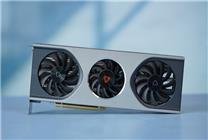
The Moores Thread S5000 has made headlines recently, marking a notable advance in domestic graphics card technology. Following its recent public listing and subsequent surge to a market valuation exceeding 400 billion yuan, Moore Thread has unveiled a new generation of GPU architecture that dramatically enhances both AI and gaming performance.
Revolutionary AI Performance
Recent reports indicate that Moore Thread’s latest GPU, the S5000, has benefited significantly from engineering optimizations, especially in partnership with Silicon Flow. This collaboration has yielded substantial gains in the inference performance of domestic graphics cards. Key metrics reveal that the S5000 achieves a prefill throughput of over 4,000 tokens per second and a decoding throughput exceeding 1,000 tokens per second.
To put that in perspective, NVIDIA’s H100 graphics card, a benchmark in AI processing, reaches approximately 6,500 tokens per second during the prefill stage. Thus, the S5000’s capability to reach over 60% of the H100’s performance marks a significant leap forward for domestic GPUs.
Cutting-Edge Architecture
The Moore Thread S5000 is built on the innovative Pinghu GPU architecture. One of its standout features is its support for FP8 precision, allowing for an impressive theoretical performance of 1,024 TFLOPS. In contrast, the H100 is known for its extraordinary FP8 performance, which is close to 4,000 TFLOPS. While the raw hardware specifications may suggest a gap, the optimizations achieved through engineering demonstrate that the S5000 can deliver competitive AI performance in practical applications.
Continuous Improvement Through Collaboration
Moore Thread is not resting on its laurels. The company is actively working to address the limitations in hardware scalability and manufacturing processes. Although its software ecosystem currently falls short when compared to competitors like NVIDIA, this landscape is shifting due to partnerships with other domestic manufacturers. Such collaborations are vital for the evolution of the graphics card market in China, and they lay the groundwork for more competitive offerings in the near future.
The Road Ahead for Domestic Graphics Cards
Despite the challenges that lie ahead, Moore Thread’s advancements signal a promising future for domestic graphics technology. With continuous hardware development and an expanding software ecosystem, the potential to challenge established giants like NVIDIA is becoming increasingly feasible. As the industry evolves, we may soon witness breakthroughs that significantly alter the competitive landscape.
Conclusion
Moore Thread’s S5000 demonstrates that domestic graphics cards are on an upward trajectory, driven by relentless optimization and strategic partnerships. The ability to achieve over 60% of the NVIDIA H100’s AI performance showcases the remarkable advances being made. As the hardware scales and the software ecosystem matures, the prospects for Moore Thread and similar companies appear brighter than ever. Competitive products that could potentially pressure industry leaders are on the horizon, promising an exciting future for tech enthusiasts and professionals alike.
By remaining attuned to the advancements in domestic GPU technology, stakeholders can fully appreciate the evolution and competitive dynamics of the graphics card market. The Moore Thread S5000 is just the beginning. The landscape is changing rapidly, and the implications for AI and gaming performance are substantial.