
NVIDIA H200 Graphics Card Export Ban Lifted: Implications and Alternatives
Summary:
- The U.S. has lifted the ban on exporting NVIDIA’s H200 graphics cards to China, enhancing large model training capabilities.
- Despite this, the ban on HBM3e memory exports remains, limiting performance potential.
- Huawei has developed alternative memory solutions in response to the ongoing restrictions.
On December 11, recent developments emerged from the United States regarding the export of NVIDIA’s H200 graphics cards to China. This new policy shift allows the export of the latest H200 model, which boasts remarkable enhancements over its predecessor, especially in training and reasoning capabilities for large AI models.
The NVIDIA H200 Graphics Card
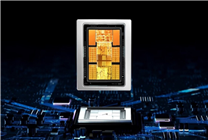
NVIDIA’s H200 graphics card is built on the advanced Hopper architecture, with impressive specifications that include FP32 performance at 67TFLOPS and FP16 performance soaring up to 1979TFLOPS—an astounding sixfold increase compared to the earlier H20 model. Additionally, this graphics card is equipped with the world’s first HBM3e video memory, featuring a generous capacity of 141GB and achieving bandwidth speeds of up to 4.8TB/s.
In the past, domestic AI graphics cards primarily relied on the HBM2e standard, which has proven inadequate in meeting the demands of leading-edge AI applications. The release of the NVIDIA H200 provides a significant boost for industries relying on powerful computational capabilities.
The HBM3e Ban: A Continuing Challenge
Despite the optimistic news regarding the H200, an important caveat remains: the U.S. export ban on HBM3e video memory persists. This restriction hampers potential advancements, as HBM3e facilitates higher capacities and faster processing speeds essential for optimal AI functionalities. As it stands, individual sales of HBM3e memory to domestic firms are not permitted.
Huawei’s Innovative Solutions
In light of these limitations, Huawei has proactively developed its own alternatives to HBM3e memory. In September, the company introduced two new types of high-bandwidth memory: HiBL 1.0 and HiZQ 2.0. These solutions are designed to cater to various AI graphic card needs based on specific use scenarios.
HiBL 1.0 and HiZQ 2.0
-
HiBL 1.0: Expected to power Huawei’s Ascend® 950PR in the first half of next year, this low-cost HBM technology significantly reduces overall investment costs in the inference prefill stage and recommendation services when compared to more expensive HBM3e/4e options.
- HiZQ 2.0: Set to launch with the Ascend 950DT later next year, this memory technology increases capacity to 144GB and boosts memory access bandwidth to 4TB/s. The Internet bandwidth will also experience a significant upgrade, reaching 2TB/s.
Future Prospects
Looking ahead, Huawei plans to expand its memory technology further with the upcoming Ascend 960 and Ascend 970 graphics cards. These models aim to enhance memory capacity to an impressive 288GB, with bandwidth capabilities reaching 9.6TB/s and 14.4TB/s, respectively, scheduled for the 2027 to 2028 timeframe.
Conclusion
The lifting of the export ban on NVIDIA’s H200 graphics cards marks a significant milestone for advancements in AI technology and model training in China. However, the continued restrictions on HBM3e exports present a challenging barrier to fully realizing the potential of these advanced graphics solutions. In response, companies like Huawei are stepping up to fill the void with innovative memory technologies, ensuring that the AI landscape evolves despite the hurdles posed by international regulations.
As the situation develops, it will be crucial for stakeholders in the AI sector to closely monitor these changes and adapt to the evolving technological landscape.
Note: This article analyzes the recent changes in the export policies related to NVIDIA’s H200 graphics cards and discusses Huawei’s innovative responses to memory technology challenges. The focus remains on the implications for AI training and development, ensuring that the content remains relevant for professionals in the field.