
The Future of AI Investments: Analyzing NVIDIA’s Strategic Moves with OpenAI
Summary:
- NVIDIA’s investment in OpenAI may not reach the projected $100 billion amidst rising costs and market adjustments.
- Industry analysts express skepticism about the sustainability of the interconnected investment model dominating AI firms.
- Market corrections have impacted major players, raising questions about the valuation of AI companies.
The artificial intelligence (AI) landscape is rapidly evolving, marked by substantial investments and strategic partnerships. As the demand for AI technologies surges, costs are escalating correspondingly. NVIDIA, a leading player in AI hardware, initially announced a monumental $100 billion investment into OpenAI, aimed at constructing a state-of-the-art data center powered by NVIDIA’s advanced AI chips. However, recent reports indicate that this plan may be experiencing significant hurdles.
Investment Developments
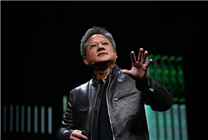
NVIDIA’s CEO, Huang Renxun, affirmed the company’s commitment to invest in OpenAI, although the specifics regarding the total investment figure are still uncertain and may fall short of the initially stated $100 billion. The partnership, which was formalized in September 2025, involves funding that would be released in phases, anticipated to support OpenAI in deploying a robust AI infrastructure.
The goal is to establish a data center capable of operating with a computing power scale of 10 gigawatts (GW), equivalent to approximately 4 to 5 million GPUs. This expansive system is set to commence operations on NVIDIA’s Vera Rubin platform by the latter half of 2026. Such a substantial investment has raised eyebrows industry-wide; while it promises to bolster OpenAI’s capabilities, it also invites scrutiny regarding its sustainability.
The Perpetual Motion Machine Theory
Critics are questioning the viability of NVIDIA and OpenAI’s investment structure, dubbing it an "AI perpetual motion machine." This concept describes a scenario where NVIDIA invests in OpenAI, which in turn utilizes those funds to purchase NVIDIA’s GPU computing power, inflating both organizations’ valuations. This interconnected economic model has been observed across the AI industry in various forms, including partnerships with other firms like AMD and Oracle.
However, this reciprocal investment strategy has faced significant challenges in the market. Oracle’s stock value has halved from its peak, igniting debates on whether a bubble exists within the AI sector. Similarly, NVIDIA’s market capitalization has experienced corrections after soaring to over $5 trillion late last year.
Market Responses and Future Implications
The skepticism surrounding inflated valuations and unsustainable investment models is not unfounded. Analysts have noted a cooling trend in the AI market, indicating that extreme valuations may not be justified long-term. Investment strategies that rely heavily on reciprocal financial arrangements can create volatility, especially in an economic climate where stock prices are increasingly sensitive to changing market sentiments.
As the AI sector matures, investors and companies will need to adopt more sustainable business models to ensure long-lasting growth. Potential solutions may involve diversifying revenue streams or pursuing strategic collaborations beyond mere financial exchanges.
Conclusion
The narrative surrounding NVIDIA’s investment in OpenAI illustrates the intricate dynamics at play in the rapidly expanding AI sector. As these companies navigate financial challenges, it is crucial for stakeholders to critically evaluate the sustainability of their investment frameworks. The coming years will likely reveal whether these colossal financial commitments can withstand market fluctuations and emerge as a bedrock for future AI advancements.
In the fast-paced world of technology investment, adaptability and strategic foresight will be essential for maintaining momentum and ensuring long-term success within the AI industry.
By fostering an understanding of these developments, stakeholders can better navigate this transformative era, ensuring that investments in AI technologies lead to genuine progress rather than short-lived bubbles.