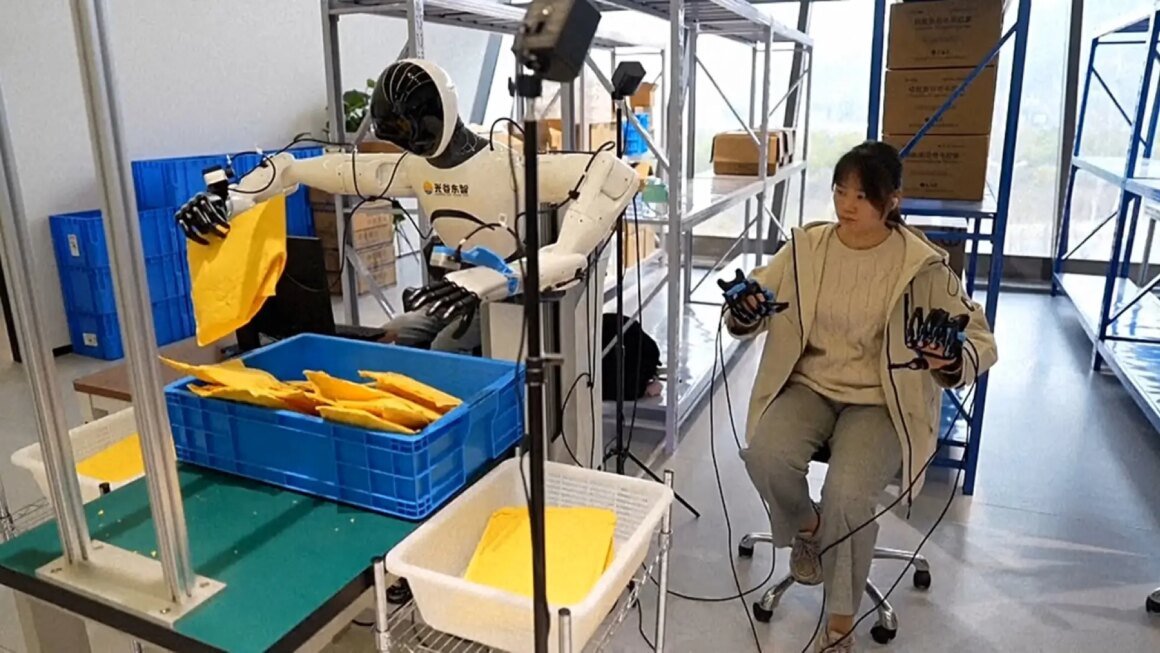

China is advancing its humanoid robots to become more practical and useful through specialized training programs. Recently, they have implemented “robot schools” where artificial intelligence models learn everyday tasks, such as making coffee, using techniques similar to how autonomous vehicles are trained. The use of virtual reality headsets is part of this innovative educational approach, enabling robots to mimic human actions and learn essential skills.
This development is particularly relevant for audiences interested in smart home devices and robotics. While these humanoid robots may not yet be available for purchase in Western markets, their progress could shape future consumer products in this field. Individuals and businesses considering investing in robotic assistants may want to keep an eye on these advancements, as they bolster the functionality and independence of these machines.
In terms of market context, the evolution of humanoid robots has seen various entries at different price points, typically ranging from a few hundred to tens of thousands of dollars depending on capabilities. Currently available alternatives include consumer-friendly robot vacuums and lawnmowers that can autonomously handle tasks without extensive training. However, these products serve only specific functions and lack the versatility that humanoid robots are aimed to achieve. As development progresses, it’s plausible that these humanoid robots will cater to more complex needs and compete with current smart devices.
For consumers considering a humanoid robot, it’s essential to weigh the current limitations against the promised benefits. While these robots represent a fascinating evolution in technology, they may not yet meet practical expectations outside controlled environments. Those who need immediate solutions for household tasks should consider established alternatives like robot vacuums or lawnmowers, which may better suit their needs at present. The performance of these humanoid designs in real-world settings remains to be validated, suggesting that it might be prudent for some buyers to hold off until they can demonstrate true autonomy.
Source:
computerhoy.20minutos.es