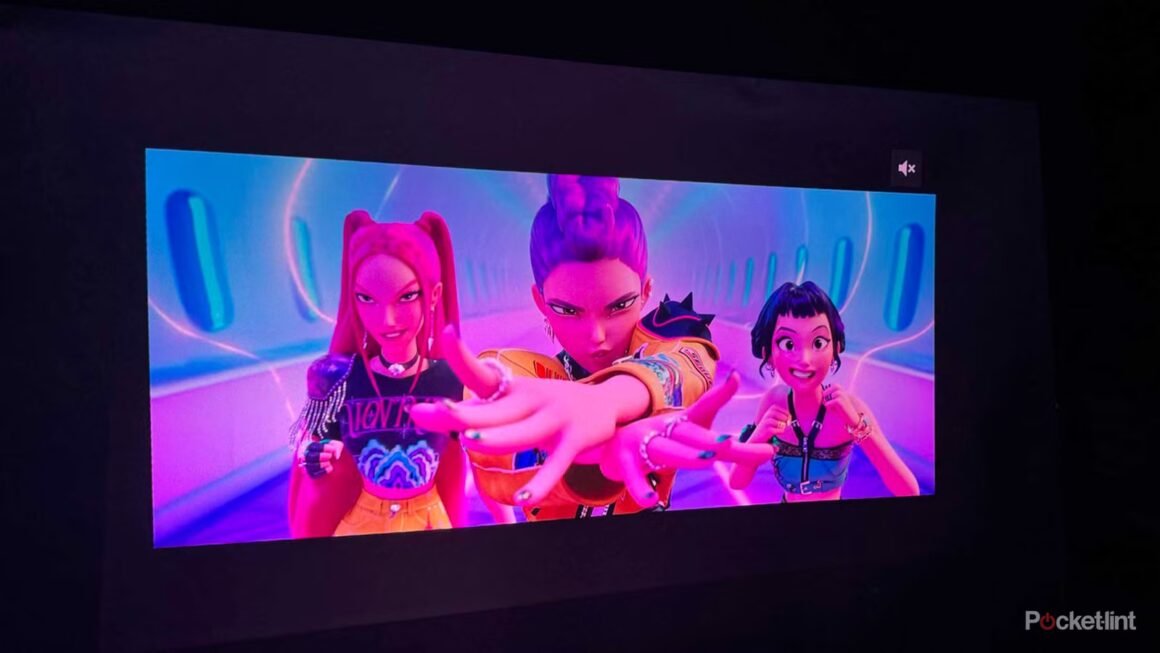

When considering a home viewing experience, many people may feel tempted by projectors, especially ultra-short throw (UST) models. However, the realities of performance and cost often tip the scales toward traditional TVs, particularly as prices for large-screen options continue to decrease. A top-tier UST projector, like the Hisense PX3-PRO, retails for around $3,000, while you can acquire a high-quality 98-inch QLED TV for a significantly lower price.
This is an important consideration for anyone looking to elevate their home entertainment setup. UST projectors promise a massive screen size and space-saving design, potentially making them appealing for movie enthusiasts with ample room. However, they involve additional costs such as a compatible screen and various mounting equipment, often pushing the final price much higher than the initial sticker. These projectors are increasingly suitable for brighter rooms than their predecessors, but they still struggle against significant ambient light, limiting their usability during the day.
In the current market, the price range for projectors varies significantly. Entry-level options can be found for around $1,300 (like the LG CineBeam S), but they tend to lack the performance required for gaming and HDR content. On the other hand, 4K TVs offer immediate benefits in terms of brightness and display quality, especially when purchasing models like mini-LED and OLED. For consumers focused primarily on value and performance, these alternatives can provide a clearer and more vibrant viewing experience without the added complexity of projector setups.
Ultimately, UST projectors are best suited for those who are committed to the idea of an enormous display and have the necessary space to accommodate them. If you prioritize versatility and ease of use, a large-screen TV is likely the better investment. Additionally, for someone who rarely watches content exceeding 100 inches, sticking with a panel TV would provide a better overall value and performance without the hassle of projector calibration and ambient light complications.
Source:
www.pocket-lint.com