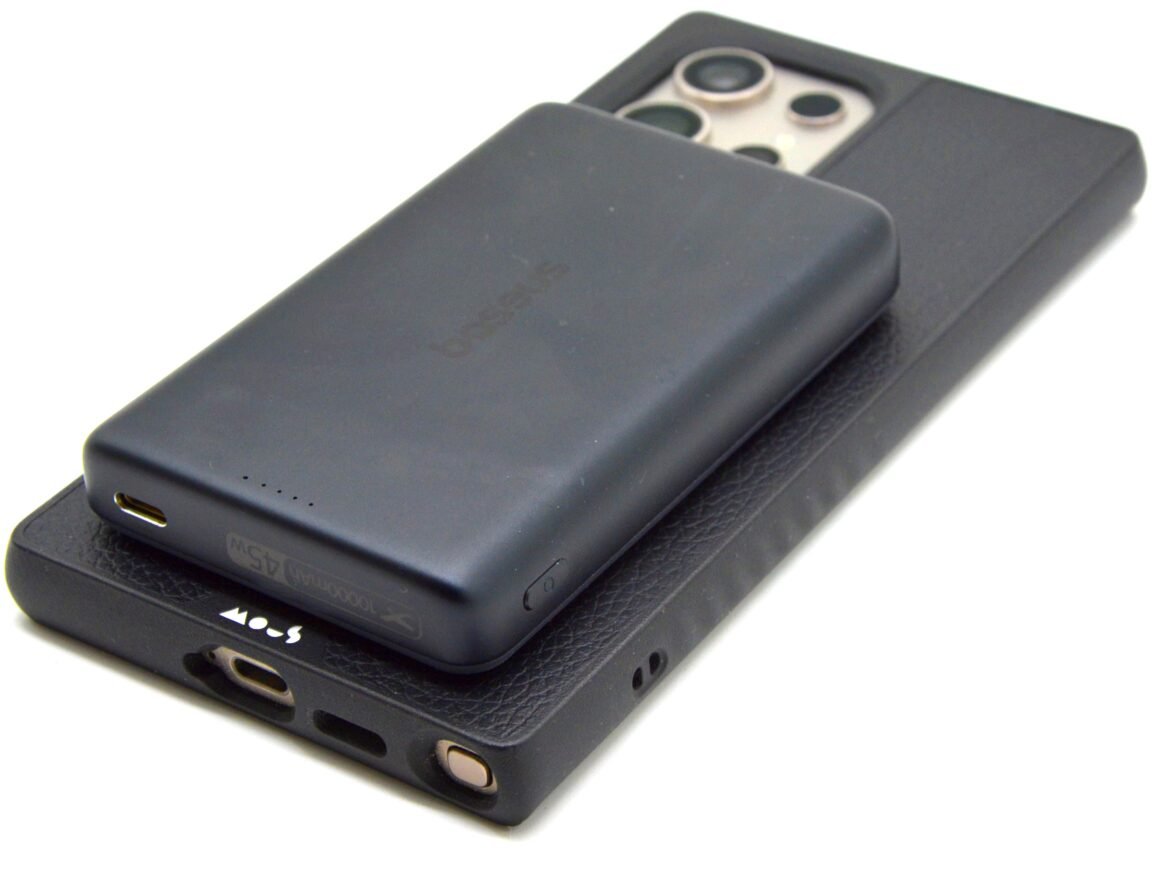

The Baseus PicoGo AM52 is marketed as the thinnest Qi2.2 power bank available, measuring just 1.6 cm in thickness, 6.5 cm in width, and 10.5 cm in length. It weighs 201.5 grams with an integrated cable and 196 grams without. The power bank features a sleek matte anthracite aluminum exterior, four LEDs for charge level indication, and a USB-C port for both charging and discharging.
This product is particularly relevant for consumers looking for a portable charging solution that adheres to the Qi2.2 standard, which supports faster wireless charging capabilities. While the market for Qi2.2 models is still emerging, this power bank’s compact dimensions make it suitable for individuals who prioritize sleek portability in tech accessories. The availability of such compact options may influence buying decisions for those with busy lifestyles who frequently charge devices on the go.
In terms of market context, the PicoGo AM52 competes with other portable chargers like the Anker PowerCore Slim 10000 and the RAVPower 10000mAh Power Bank. The Anker model is typically priced around $30, while the RAVPower offers features like pass-through charging for about $25. In comparison, if the Baseus PicoGo AM52 is priced similarly, it provides a unique selling point due to its slim design. Consumers should evaluate if they value this thin profile over the higher capacity or versatility of more traditional options in that price range.
The Baseus PicoGo AM52 could appeal to those who need a lightweight and sleek solution for charging devices but may not be the best fit for everyone. For users who require higher capacity or features such as multiple ports for charging multiple devices simultaneously, alternatives may be more suitable. Additionally, if someone prioritizes durability and ruggedness, opting for a bulkier but more robust power bank could serve them better in more demanding environments.
Source:
www.notebookcheck.net