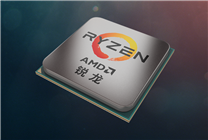

AMD’s Zen 6 Architecture: A New Era in High-Performance Computing
Summary:
- AMD’s upcoming Zen 6 architecture emphasizes unprecedented performance and efficiency improvements over its predecessors.
- The architecture is designed for extreme throughput, featuring up to 256 CPU cores powered by TSMC’s cutting-edge 2nm process.
- Expected enhancements include a significant boost in vector and floating-point calculation capabilities, ideal for complex computational tasks.
In the fast-evolving landscape of microprocessors, AMD is set to make a significant leap with its Zen 6 architecture, anticipated to be officially unveiled at CES in early January. This next-gen design signifies not merely an incremental enhancement over previous models like Zen 4 and Zen 5, but a complete architectural overhaul aimed at maximizing performance and energy efficiency.
Unveiling the Zen 6 Architecture
The Zen 6 architecture is poised to deliver remarkable advancements, boasting up to 256 CPU cores. Leveraging TSMC’s advanced 2nm manufacturing process, this new generation will not just enhance computational output but also improve energy efficiency by as much as 70%. Notably, AMD has reported that the density of threads within these processors will see a substantial increase of 30%.
Among the distinguishing features of Zen 6 is its support for the complete AVX-512 instruction set, which enhances its capacity for sophisticated vector and floating-point calculations, thus positioning it as an optimal choice for data-intensive applications. AMD’s commitment to tackling complex mathematical problems underscores the architecture’s design philosophy: function meets efficiency.
Targeted Innovations
The architecture is primarily geared towards the EPYC server lineup, code-named "Venice." This line includes optimizations aimed specifically at server performance, targeting high-throughput workloads and extensive computing tasks in data centers. The Zen 6 EPYC series aims to outshine its predecessor, the Zen 5 architecture EPYC, which currently offers a maximum of 192 cores. With enhanced IPC (Instructions Per Cycle), users can expect not only a higher core count but also exceptional architectural efficiency.
Consumer-Grade Advancements
For consumers, the Zen 6 architecture will extend to desktop and laptop variants. The desktop version, referred to as "Olympic Ridge," and the notebook series, including "Medusa" and "Gator," will benefit from the architecture’s significant improvements. Although the specifics regarding the implementation of TSMC’s 2nm process in consumer products remain somewhat ambiguous, the anticipated results are exciting.
One particularly promising development is the upgrade in the number of cores for the desktop Ryzen processors, increasing from the current 16 to a remarkable 24 cores—an improvement of 50%. This core expansion is expected to yield substantial performance gains across a range of applications, reflecting the ongoing commitment of AMD to push technological boundaries.
Conclusive Thoughts
As the tech community anticipates the launch of the Zen 6 architecture, it is clear that AMD is focused on delivering high-performance computing solutions that meet the needs of both enterprise and consumer markets. The combination of advanced core architectures, significant energy efficiency gains, and innovative technological features reaffirms AMD’s position as a frontrunner in the processor market.
The transition to the Zen 6 architecture represents a substantial advancement, ensuring that AMD remains competitive in an industry that continues to push for higher performance and lower energy consumption. With an eye towards the future, AMD is not simply keeping pace but is setting the stage for the next generation of high-performance computing.
In summary, the imminent unveiling of AMD’s Zen 6 architecture promises a landscape transformed by enhanced performance metrics, elevated core counts, and groundbreaking efficiency levels that cater to the most demanding computational tasks, solidifying AMD’s reputation as a leader in cutting-edge technology.