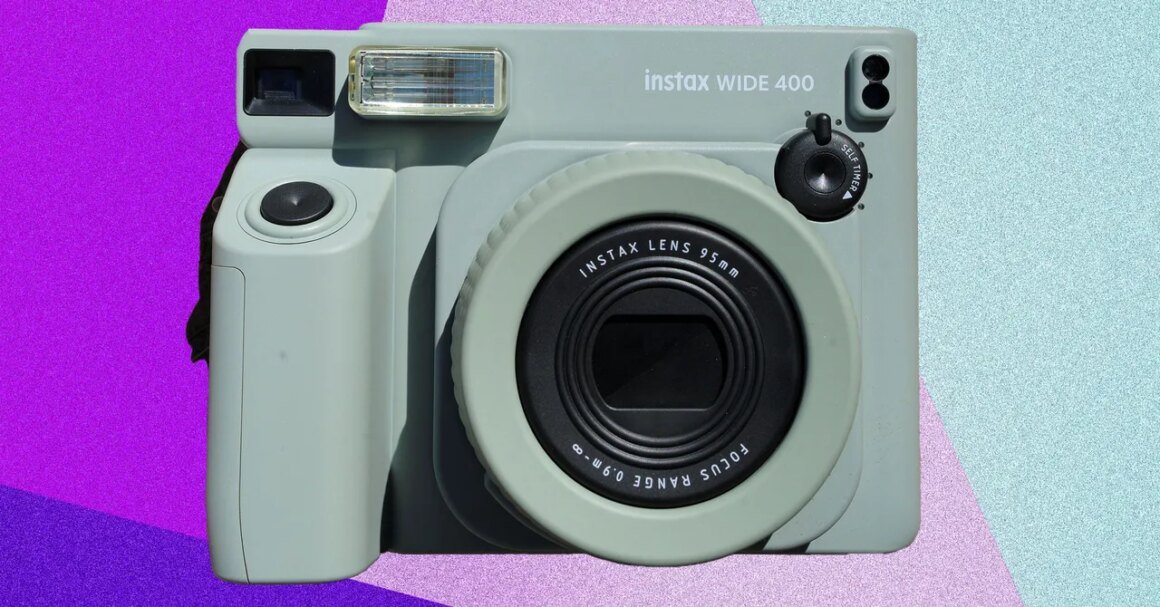

The Fujifilm Instax Wide 400 is a point-and-shoot instant camera designed to produce larger prints, using Instax Wide film. It retains the familiar full automatic exposure system found in its predecessor, the Wide 300. While this lack of manual control may limit experienced photographers, the camera is valued for its simplicity and the large format images it produces, making it appealing for casual shooting and sharing. The price for the Instax Wide 400 generally hovers around $150.
This camera is particularly significant for those looking to combine nostalgia with practicality. The larger film format allows for more vibrant and engaging images, which can be more enjoyable to view and share compared to smaller instant film sizes. With the Instax Wide 400 being widely available in global markets, it fills a niche for instant film enthusiasts who prioritize ease of use and larger image size over manual control. Buyers searching for a straightforward instant camera will likely find this model meets their needs.
In terms of market context, the Instax Wide 400 is competitively priced but sits above budget options like the basic Instax Mini series, which typically falls around $100. Alternative products include the Lomography Lomo’Instant Wide, priced at approximately $200, which offers additional lens options and a bit more creative flexibility, albeit with potentially varying image quality. At the higher end, the Fujifilm Wide Evo is available for around $409, adding advanced features like filters and dual focal lengths but receiving mixed reviews due to its awkward shutter design and limited usability in spontaneous shooting scenarios.
The Instax Wide 400 is best suited for casual photographers or social events where instant prints can be shared on the spot. Its straightforward design and familiar framework appeal to users who may not require advanced photographic capabilities. However, those who are looking for greater control over exposure settings or are more experienced photographers might prefer alternatives like the Lomography Lomo’Instant Wide for its customizable add-ons or even wait for more advanced models like the Wide Evo, despite its drawbacks. If manual settings are a priority for your photography, you might be better off exploring these other options before committing to the Instax Wide 400.
Source:
www.wired.com