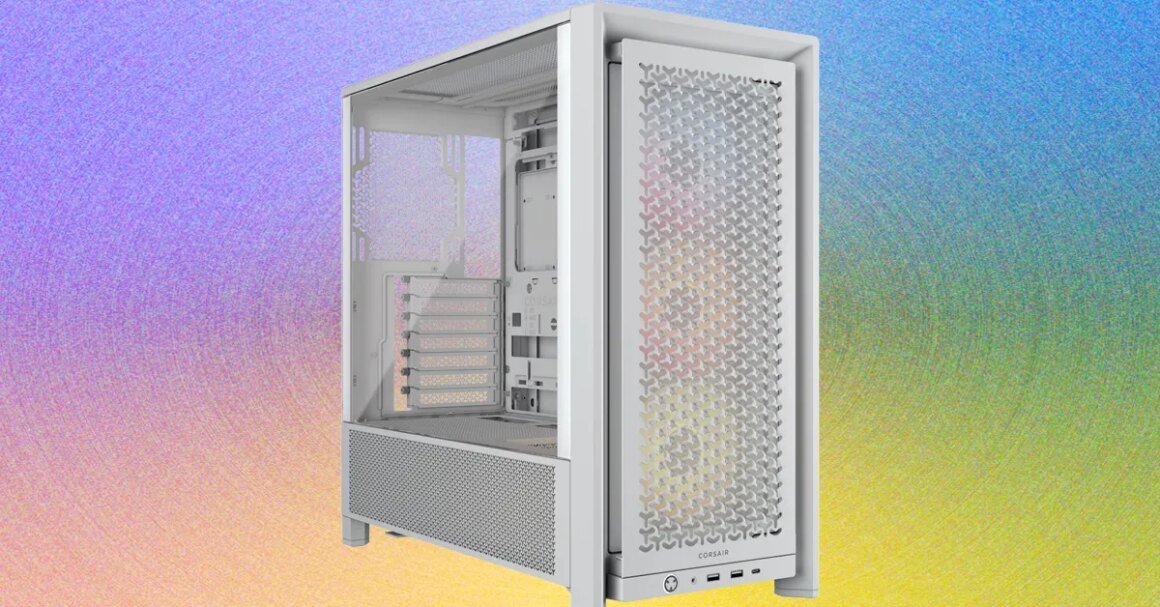

The Corsair Frame 4000D RS is a newly released mid-tower ATX computer case priced at approximately $120. This upgraded version of the popular 4000D promises enhanced usability and cooling alongside a refined aesthetic. The case is particularly aimed at users looking for flexibility in component support and improved airflow design, making it a compelling choice for PC builders.
This product is relevant to anyone in the market for a new PC case, particularly those who prioritize cooling performance and spacious internal layouts. It is a solid option for both seasoned builders and newcomers, offering features that simplify the assembly process. As the market continues to see various components evolve, having a case that can accommodate these changes without sacrificing style or functionality is crucial for prospective buyers globally.
In terms of market positioning, the Frame 4000D RS sits in a mid-range category, with competitors such as the NZXT H510 and Fractal Design Meshify C available at similar or slightly lower prices. The NZXT H510, priced around $75, offers a more minimalistic design but lacks the airflow advantages of the Corsair case. On the other hand, the Fractal Design Meshify C, typically priced around $100, provides excellent cooling but may not have the same level of component versatility. Each case has its merits, making it essential for buyers to assess what features matter most to their build.
The Frame 4000D RS is well-suited for those who value both aesthetic design and performance, especially if you are planning a high-end rig. However, potential buyers who prefer a simpler case might find the more complicated internal layouts of the Frame 4000D RS to be a drawback. Additionally, those who seek absolute silence in their builds may want to consider alternatives that prioritize noise reduction over cooling efficiency. In summary, while the Frame 4000D RS is an excellent case, it might not be the best fit for every builder.
Source:
www.wired.com