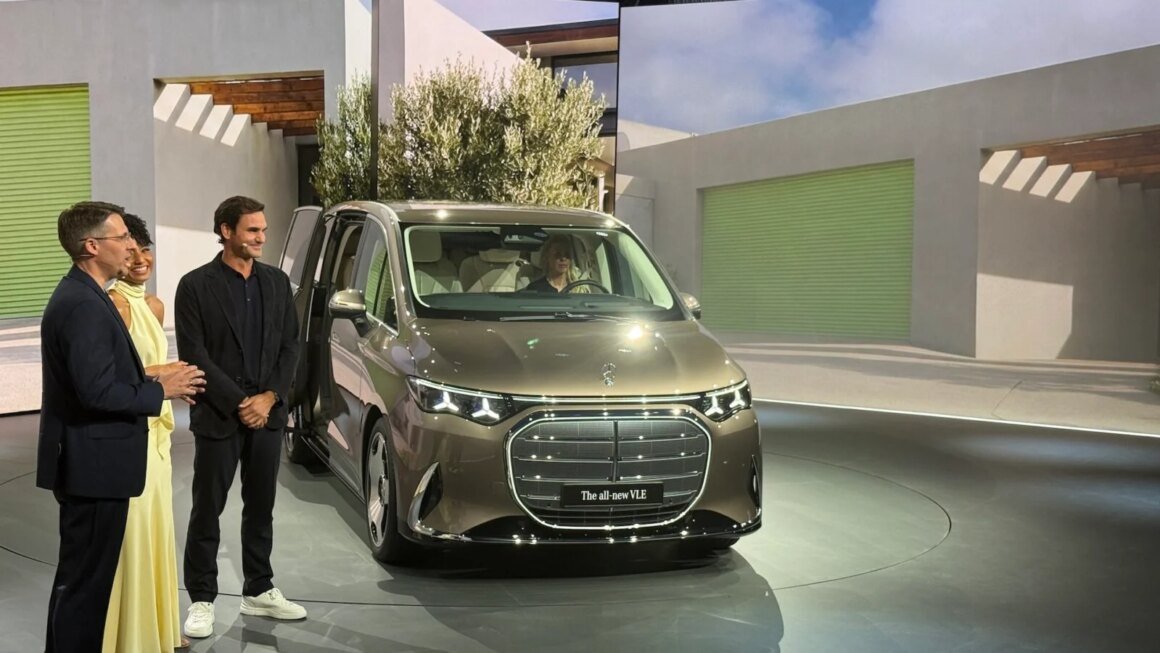

Mercedes has unveiled its new electric van, the VLE, boasting over 700 km of range and rapid charging capabilities of up to 300 kW. This model is part of the company’s push to electrify not just SUVs and sedans, but also their extensive lineup of vans and utility vehicles, which have largely lagged behind in the electric transition.
This development is particularly significant for families and businesses looking for versatile transportation options. With an emphasis on comfort, the VLE can accommodate up to eight passengers and features an adaptable interior that can be modified via voice or smartphone commands. This functionality positions the VLE as a potential competitor in both family and commercial transport markets, making it relevant to a global audience.
In terms of market positioning, the VLE enters a competitive field alongside models such as the Ford E-Transit and the Volkswagen ID. Buzz. While the Ford E-Transit starts at around $43,000 and offers a respectable range, it doesn’t match the VLE’s autonomy or advanced tech features. The ID. Buzz, priced similarly but with lower capacity and range, caters more to nostalgic buyers looking for a modern take on the classic VW bus. Each vehicle serves different market segments and needs, highlighting that the best choice largely depends on individual requirements.
For buyers considering this van, the Mercedes VLE is an excellent option if range and advanced technology are top priorities. However, those on a tighter budget might want to explore lower-cost alternatives, like the E-Transit, which provides essential van functionalities without some of the advanced features. Ultimately, while the VLE offers undeniable advantages in range and luxury, its higher price point may not justify the investment for all users.
Source:
www.01net.com