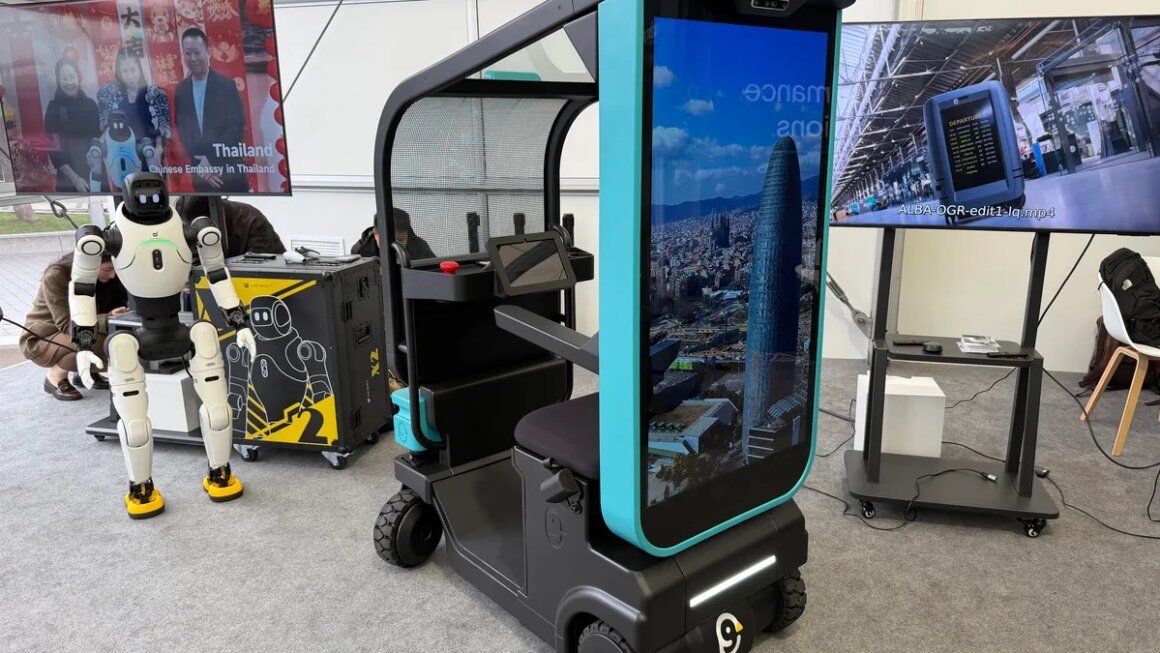

The Mobile World Congress highlighted several intriguing tech developments designed to enhance the airport experience, including autonomous robots, smart baggage tags, and innovative hydration solutions. Notably, AGiBot showcased humanoid robots that assist with flight check-ins and navigation, while BagID introduced a digital luggage tag that syncs with devices like Apple’s Find My. The BagID tag costs approximately $238 and can track luggage location, enhancing peace of mind for travelers. These innovations aim to streamline processes and reduce stress during travel.
For frequent travelers or those considering an upcoming trip, these technological advancements may be particularly relevant. The introduction of robots that can help navigate crowded terminals and smart baggage solutions could significantly alleviate common travel hassles. While not yet universally available, these innovations indicate a shift toward more tech-integrated airports, potentially reshaping how passengers move through these spaces in the future.
In terms of market context, the price point of the BagID digital tag positions it within the higher end of luggage tracking solutions. For comparison, Apple’s AirTag retails for about $29, making it a budget-friendly alternative, albeit without the digital display and direct airline integration provided by BagID. Other products like Tile offer similar functionality in a different format, though they also lack the specific features aimed at airline travelers. Each option has its merits: AirTag is excellent for general tracking, while BagID provides specialized features tailored to frequent flyers.
These advancements may be appealing to tech-savvy travelers looking for enhanced convenience in their airport experience. However, those who travel infrequently or prefer simpler solutions might find these innovations unnecessary. For travelers on a budget, basic tracking tools or traditional luggage tags could suffice. Ultimately, assessing personal travel habits and needs is essential before considering these more advanced options.
Source:
www.cnet.com