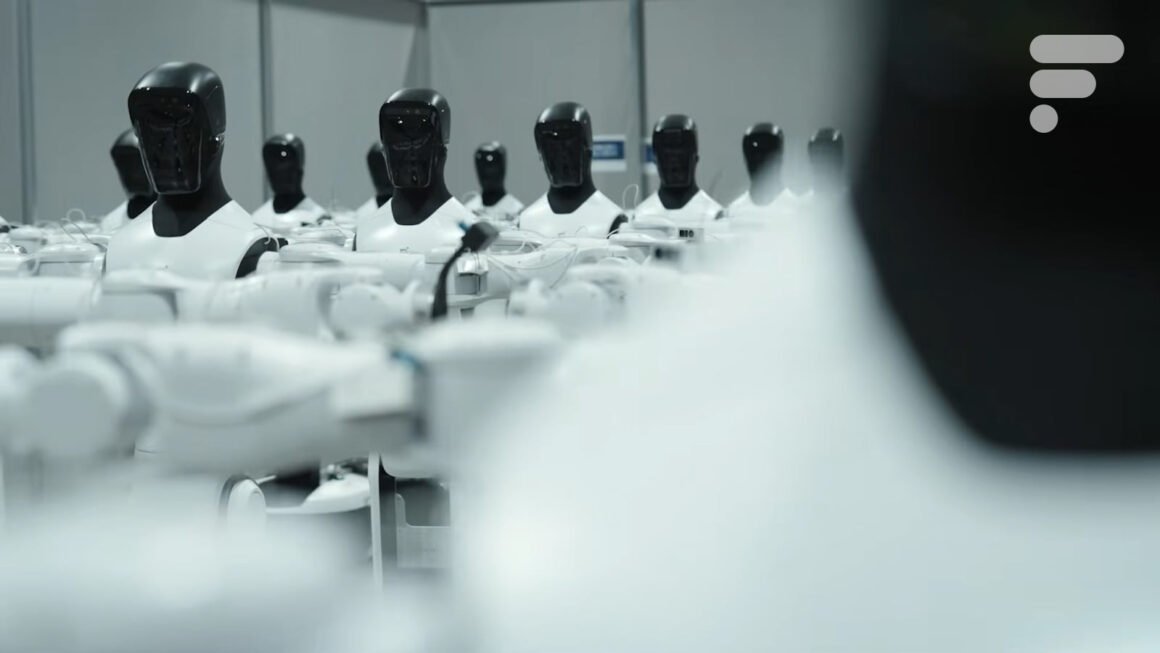

Chinese humanoid robots are poised to make significant inroads into European automotive factories, potentially replacing human workers on production lines. The Agibot G2, one of the latest models from the startup Agibot, features advanced capabilities powered by Nvidia’s AI technology and is priced above $117,000 per unit.
This development is crucial for anyone involved in robotics or the automotive supply chain. The introduction of humanoid robots in manufacturing could dramatically alter labor dynamics, particularly in regions reliant on traditional assembly line work. Businesses considering automation may find that these advanced systems provide efficiency and precision, influencing their current purchasing decisions. However, availability in Western markets is still pending, as production will initially be targeted at European plants through local partnerships.
Agibot’s G2 represents a shift from older robotic models that typically utilize static arms for tasks. This robot integrates embodied AI, allowing for more intricate interactions and movements on the assembly line. With its hydraulic arms and robust processing capabilities, it caters to industries looking for advanced automation. Comparatively, traditional robotic arms are often less adaptable and limited by their predefined functions. Other options in the market range from basic robotic arms starting around $25,000 for simpler tasks to full-fledged collaborative robots priced between $50,000 and $100,000, depending on their features and adaptability.
The Agibot G2 is a strong consideration for large automotive manufacturers needing to enhance productivity without straining their workforce. However, smaller companies or those with limited budgets might find the upfront investment prohibitive and may prefer collaborative robots that offer versatility at a lower cost. Additionally, prospective buyers should weigh the benefits of implementing humanoid robots against the challenges of staff retraining and the potential for unintended job displacement, which could lead to backlash in less flexible labor markets.
Source:
www.frandroid.com