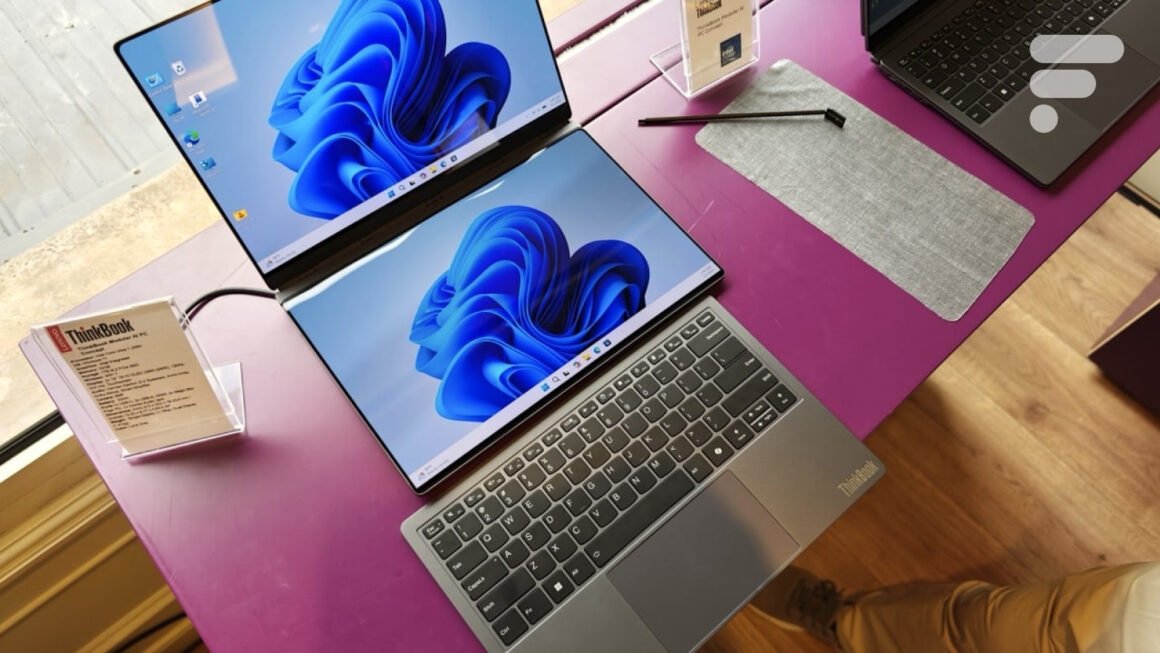

The Lenovo ThinkBook Modular AI PC Concept represents a significant shift in how we think about laptops. This innovative device starts as a compact 14-inch ultrabook capable of expanding into a full 19-inch workstation when combined with additional modular components. Utilizing unique pogo-pin connectors, this concept allows users to attach an external display and adapt their workstation according to specific needs.
This development matters particularly to mobile professionals who often juggle tasks between working in transit and setting up at remote locations. The ability to transform a portable laptop into a larger display without complex setups addresses a common complaint among users who require more screen real estate for tasks like programming, data analysis, or design work. Although this product is currently a concept, its implications could resonate globally, indicating potential future trends in laptop design.
When situating this concept within the current tech landscape, it’s essential to consider its positioning. Traditional laptops like the MacBook Air and Dell XPS series offer strong performance but lack this kind of modularity. For users seeking versatility, alternatives include the Microsoft Surface lineup, which allows for a larger touch interface but may not offer the same modular connectivity. The ThinkBook Modular AI PC Concept’s proposed design could carve out a unique niche for professionals needing adaptable setups in varying work environments.
Overall, the ThinkBook Modular AI PC Concept is designed for those who prioritize flexibility in their workspace and may particularly attract users looking to optimize their productivity on the go. However, for buyers who prefer a traditional, all-in-one type laptop experience without the hassle of setting up external displays, more standard models may be a better fit. Additionally, those who don’t frequently require a larger screen while working might find this modularity unnecessary.
Source:
www.frandroid.com