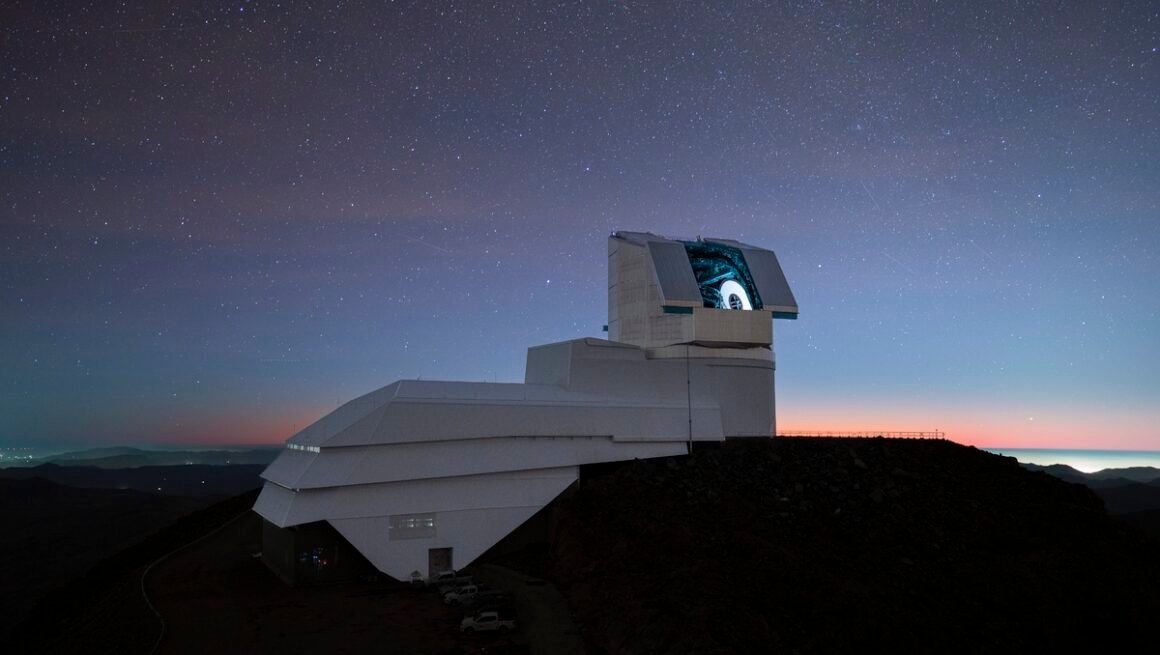

The Vera C. Rubin Observatory in Chile recently achieved a significant milestone by generating 800,000 alerts within a single night as it prepares for its decade-long Legacy Survey of Space and Time (LSST) program. This project aims to capture an unprecedented amount of astronomical data, with projections of up to 7 million alerts each night. The observatory’s advanced 3,200-megapixel camera will take images of the sky every 40 seconds, paving the way for groundbreaking discoveries in astrophysics.
This development matters greatly for anyone interested in the field of astronomy or for consumers who wish to stay informed about advancements in space research. With its capabilities set to vastly improve the speed and volume of data collected, the Rubin Observatory will democratize access to this information. Alerts generated from its observations will be publicly available to both professional researchers and citizen scientists, potentially impacting how anyone engages with and understands astronomical phenomena.
In terms of market context, the Rubin Observatory represents a major leap forward compared to traditional observatories. While some systems process significant data, none are expected to match the LSST’s capacity for real-time alerts derived from approximately 10 terabytes of data collected each night. Current alternatives, such as the Hubble Space Telescope or large ground-based telescopes, may provide high-quality images but lack the rapid alerting system and expansive data collection that Rubin promises. Both Hubble and other existing observatories focus on fewer targets over longer periods, resulting in significantly less immediate output.
Considering its ambitious scope, the Vera C. Rubin Observatory is likely to appeal primarily to professional astronomers and institutions focused on advanced research. Those who find joy in exploring the cosmos could also benefit from the citizen science opportunities it presents. However, for casual enthusiasts or those seeking a more hands-on experience, traditional telescopes or even smartphone-based astronomy apps might be more appropriate. The significant scale of Rubin’s operations may not cater to those who prefer a more personalized approach to stargazing or cosmic exploration.
Source:
www.lesnumeriques.com