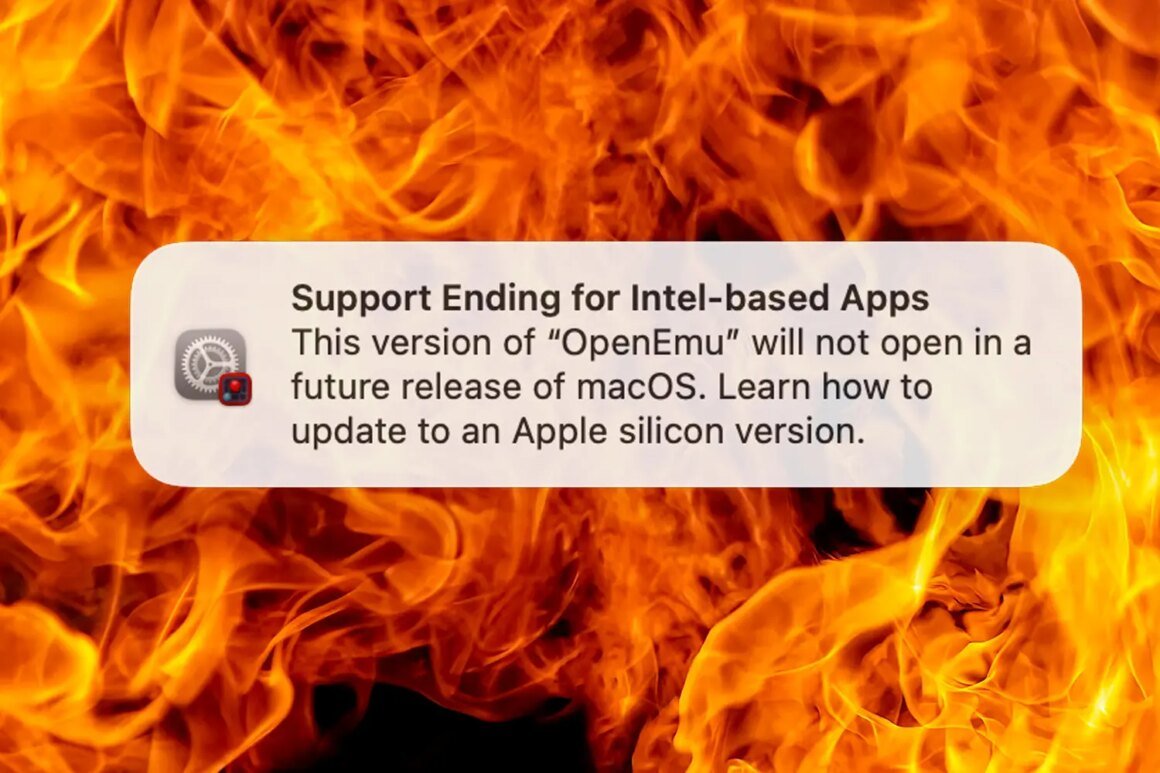

Apple has officially announced that starting with macOS 28, support for Intel-based Mac apps will be phased out entirely. The last version of macOS to support these apps is macOS 26 (Tahoe), with the final iteration of the Rosetta translation layer to be included in this version. As a result, users of Intel Macs will soon be left without access to a range of applications, particularly those that have not been updated for Apple’s newer silicon architecture.
This shift is pertinent for anyone currently using an Intel Mac or considering the purchase of newer software. Users who rely on legacy applications—such as old games or specialized software—may find that crucial tools are no longer available. If you’ve been holding onto old favorites like retro emulators or niche audio plugins, this change could significantly impact your user experience. Transitioning to Apple Silicon is now essential for compatibility with future software developments.
In the current market, users looking to upgrade have several options. For those wanting to stick with Intel Macs, the alternatives should offer a range of specifications to choose from. Entry-level models may go for around $1,000, while higher-end configurations reach upwards of $2,500. Comparatively, newer Apple Silicon models begin at around $1,200 and can exceed $3,000 for top specs. For users on a budget, Windows-based machines are worth considering, with decent performance ranging from $600 to $1,500 and broader compatibility with various applications. Each option comes with trade-offs, particularly in software support and ecosystem stability, so choosing based on personal needs is crucial.
Ultimately, if you heavily depend on Intel apps or older software, now may not be the right time to make an upgrade, given that future app compatibility issues loom. Users comfortable with exploring alternatives may prefer to stick with updated machines or wait for specific solutions for their software needs. At the end of the day, balancing the need for newer hardware with software requirements will be key in making an informed decision.
Source:
www.stuff.tv