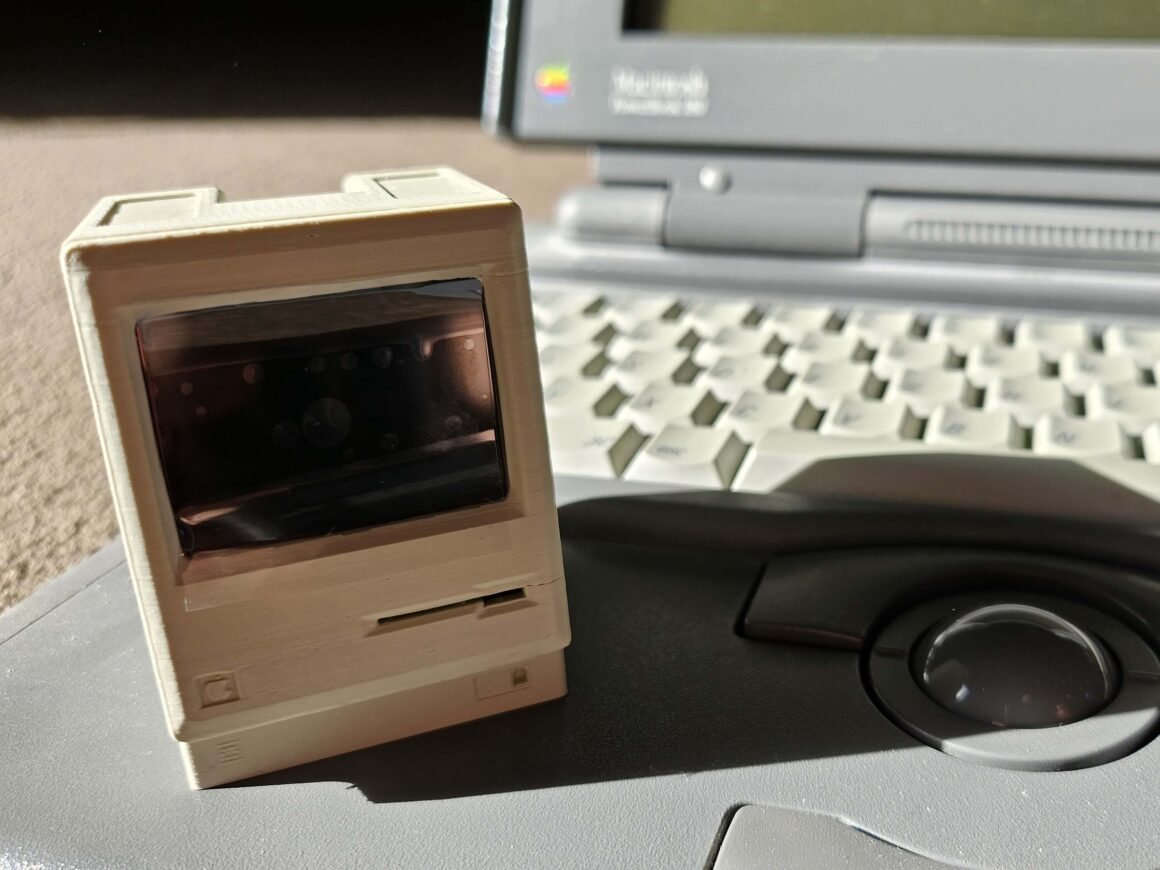

The Pico Mac Nano is a compact computing device that incorporates a 3D-printed casing made from biodegradable PLA bioplastic. It operates using System 3.2 and can be powered by a USB-C connection. Notably, it features optional sound and battery modules, although they are not included as standard. The device also comes equipped with a USB adapter that offers additional ports for peripherals, alongside a micro SD card slot for software loading. Care should be taken with the front floppy disk slot, as it houses part of the LCD screen.
This product is particularly relevant for enthusiasts of retro computing and those looking for a unique way to experience classic Apple software. As a globally available option, the Pico Mac Nano bridges the gap for users interested in small-form-factor computing solutions that blend nostalgia with modern technology. Its compact design makes it suitable for users with limited desk space or those seeking an interesting conversation piece.
In terms of market positioning, the Pico Mac Nano stands out mainly for its design and intended retro appeal, appealing to a niche market that values aesthetics and functionality. Compared to other compact computing options, like the Raspberry Pi or the Intel NUC, it offers a specialized experience but may not deliver the same flexibility or raw performance. While Raspberry Pi models start as low as $35, they require additional peripherals and setup, which could deter some users. The Intel NUC offers stronger specifications but comes at a higher price point, thus targeting a different audience.
The Pico Mac Nano is best suited for tech enthusiasts who appreciate retro computing and unique design. However, if you prioritize performance or a broader range of software compatibility, you might consider looking elsewhere. The limitations tied to its biodegradable material, such as sensitivity to heat, and its retro-centric operating system, may not align with everyone’s computing needs, particularly for those needing a reliable, everyday device. Therefore, it may not be the ideal choice for typical users who require a versatile, high-performance computing option.
Source:
www.notebookcheck.net