
Summary
- Extreme Overclocking Risks: Alva Jonathan’s attempt to push the MSI RTX 5090 Lightning Z led to a catastrophic failure, highlighting the inherent dangers of extreme overclocking.
- Record-Breaking Performance: With liquid nitrogen cooling, the GPU achieved impressive benchmarks before succumbing to excessive voltage.
- BIOS Leak Implications: The availability of the 2500W XOC BIOS presents risks for users of standard RTX 5090 models that are not built for such extreme workloads.
The High Stakes of Overclocking: A Cautionary Tale
In a recent turn of events, renowned overclocking enthusiast Alva Jonathan released a video documenting a devastating blow within the overclocking community. The MSI RTX 5090 Lightning Z, a leading graphics card catering to hardcore gamers and overclockers alike, met an unfortunate fate during an attempt to set a world record. This high-performance GPU, valued at tens of thousands, succumbed to extreme voltage and power demands, leading to physical damage that rendered it unusable.
A Powerful GPU Meets Its Match
The MSI RTX 5090 Lightning Z stands as one of the most formidable graphics cards in today’s market, initially engineered for optimal performance with two factory-configured Thermal Design Power (TDP) levels: 800W and 1000W. Impressively, the card also offers a 2500W XOC BIOS mode intended for extreme enthusiasts seeking to push boundaries further.
During his experiment, Alva employed liquid nitrogen for cooling, successfully elevating the core frequency to an astonishing 3.42GHz while operating at nearly 1000W power consumption and a voltage of 1.12V—an increase of 1GHz over the standard public version. Remarkably, he managed to maintain a temperature below 10°C throughout the duration of this ambitious attempt.
Brief Success Before Catastrophe
Despite achieving a world record Geekbench 5 score of 683,433 points at a frequency of 3.5GHz, disaster struck when Jonathan escalated his quest for even higher benchmarks. In this next phase, the GPU used an earlier version of the 2500W BIOS, pushing the core voltage beyond limits to roughly 1.2V.
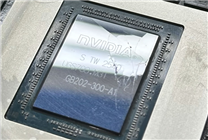
Unfortunately, this excessive voltage proved too much for the GPU to handle. The instantaneous load wrought havoc, causing visible cracks to form on the core’s surface. Compounding the issue, activating the 2500W BIOS voided the card’s warranty, leaving Jonathan responsible for this significant loss.
Implications of the BIOS Leak
Amidst this incident, it is crucial to note that the leaked 2500W XOC BIOS has surfaced online, allowing users of non-Lightning Z models the ability to implement it. However, caution is paramount; while ordinary RTX 5090 cards are designed for power consumption around 600W, flashing the overloaded BIOS without proper hardware could lead to catastrophic failures similar to Jonathan’s.
Conclusion
The saga surrounding Alva Jonathan and the MSI RTX 5090 Lightning Z serves as a potent reminder of the limitations that even the most advanced hardware can face under extreme conditions. As the allure of overclocking continues to attract enthusiasts, it’s essential to approach these exhilarating pursuits with caution, understanding both the potential for groundbreaking performance and the corresponding risks involved.
With each ambitious attempt, overclockers not only push the limits of technology but also reckon with the fragile balance between performance and sustainability. As the industry evolves, future designs may need to consider a more robust approach to handling extreme overclocking demands—addressing both hardware capabilities and user safety.