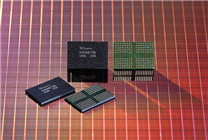

DRAM Supply Shortage: A Long-Term Challenge
Key Takeaways
- Escalating Prices: DRAM prices surged by 80% to 90% in the first quarter of this year, with projections indicating further increases, potentially lasting until 2028.
- AI Demands: The booming AI infrastructure is straining supply capabilities, leading major manufacturers to focus resources on more expensive High Bandwidth Memory (HBM), worsening the shortage of traditional DRAM.
- Long-Term Outlook: Experts predict that without a significant shift in production capacities and technologies, the DRAM supply deficit may persist, influencing market prices for years to come.
The global demand for Dynamic Random Access Memory (DRAM) is reaching unprecedented levels, driven largely by significant investments from major cloud service providers into artificial intelligence (AI) data centers. However, this surge in demand is hitting a wall due to existing production limitations, resulting in soaring prices and an ongoing supply shortage.
Current Market Dynamics
According to recent industry data, DRAM prices have skyrocketed, increasing by as much as 90% in early 2023 alone. Many DRAM manufacturers are anticipating that prices will continue to climb in the coming months. The production capabilities that are available for 2026 and 2027 have already been allocated, creating a situation where contract prices need to be renegotiated quarterly. Some market analysts believe the supply challenges, combined with increasing prices, could persist until 2028.
To maximize profit margins, leading DRAM manufacturers—Samsung Electronics, SK Hynix, and Micron—are prioritizing the production of HBM, which is essential for AI data centers. Consequently, the supply of consumer DRAM is being further constrained, leading to heightened consumer prices for memory products.
Understanding the Shortage
The cyclical nature of the DRAM market is well-acknowledged within the industry. Experts note that this current shortage is primarily a result of a collision between the cyclical booms and recessions that have historically characterized the DRAM industry, coupled with the rapid and expansive build-up of AI infrastructure.
Industry analyst Thomas Coughlin emphasizes that the capital-intensive nature of constructing new fabrication plants—often exceeding $15 billion—leads to complexities in expanding production. The timeline from planning to operational capacity can exceed 18 months, meaning that supply typically lags behind demand, resulting in cyclical oversupply and subsequent price decreases.
The recent surge in prices has roots in the pandemic, which triggered a supply panic. Giants like Amazon and Google stockpiled memory to ensure continuity in remote work setups. However, as data center expansions slowed in 2022, prices plummeted. Some manufacturers have even resorted to cut production by 50% in a desperate attempt to stabilize prices.
Future Outlook
As new data centers proliferate—nearly 2,000 are currently planned or under construction—demand for DRAM is set to rise markedly. McKinsey forecasts that investments in data center infrastructure will approach $7 trillion by 2030, with AI-centric data centers capturing a significant share of this investment.
Nvidia stands out as the primary beneficiary of this boom, witnessing a staggering growth in revenue from its data center sector. The increasing demand for HBM—to support advanced AI GPUs—further complicates DRAM availability, as HBM is typically three times more expensive than standard DRAM.
Micron Technology CEO Sanjay Mehrotra highlighted that the market for HBM is expected to explode from $35 billion in 2025 to $100 billion by 2028, potentially exceeding the overall size of the DRAM market by 2024. This imbalance suggests that supply levels will struggle to keep pace with soaring demand for the foreseeable future.
Structural Challenges and Innovations
Addressing the DRAM supply shortage requires either advanced technological innovation or an expansion of fabrication capabilities. While major players are focusing on increasing production capacities, these initiatives won’t contribute to price reductions in the immediate future.
New fabs are being planned, yet most, including a significant HBM wafer fab by Micron in Singapore, won’t commence production until 2027 or later. Similarly, SK Hynix’s new facilities in South Korea and the United States aim to meet burgeoning AI demands but are strategically focused on HBM production, sidelining consumer DRAM needs.
Conclusion
The future of the DRAM market remains uncertain. Analysts maintain that while increased production capabilities may ease some supply pressures, prices are unlikely to fall significantly—typically, price declines in cyclical markets lag behind increases. With strong ongoing demand for AI computing, industry stakeholders may need to prepare for a prolonged period of high pricing and constrained supply across various memory technologies.
As we look ahead, the combination of supply chain diversification, advanced packaging technologies, and effective collaboration between memory and chip designers will be crucial. However, the reality is that recovering from the current DRAM supply crisis may take years, with little relief in sight until at least 2028.