
Summary
- A team successfully upgraded an iPhone 11 Pro, originally released nearly seven years ago, to a 12,000mAh battery—nearly three times its factory capacity.
- This development challenges the perception that Apple is limited by device space, raising questions about whether the company deliberately opts for smaller battery capacities.
- The upgrade illustrates the potential for enhanced battery technology, sparking discussions about Apple’s battery choices in its products.
Unveiling the Potential: The iPhone 11 Pro Transformed
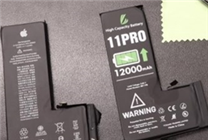
In a groundbreaking development for smartphone enthusiasts, a recent upgrade to the iPhone 11 Pro has dramatically altered the conversation around Apple’s battery capacities. A video demonstration revealed that the team at The Fix successfully installed a 12,000mAh battery into an iPhone originally equipped with a 3,046mAh battery. This modification not only enhances the phone’s longevity but also challenges the common narrative surrounding Apple’s battery design limitations.
Breaking New Ground
The successful upgrade dismantles the long-held belief that Apple is constrained by the physical space within its devices, preventing them from utilizing larger batteries. As consumers increasingly demand more power, this modification raises significant questions. Why are current iPhones, including the latest models, equipped with comparatively smaller batteries?
Most recent iPhones, such as the eSIM version of the iPhone 17 Pro Max, come with a battery capacity of 5,088mAh. However, with the impending launch of the iPhone 18 Pro Max, it is anticipated that Apple will break this upper limit. The striking contrast between the upgraded iPhone 11 Pro and its factory capacity highlights an ever-growing gap in consumer expectations versus actual offerings.
The Process and Results of the Upgrade
The upgrade process itself was notably straightforward. The newly installed 12,000mAh battery physically matched the original battery, eliminating any compatibility concerns. It is speculated that the new battery employs silicon-carbon technology, which is gaining traction among smartphone manufacturers due to its efficiency.
Despite Apple’s warnings against the use of unauthorized batteries, it’s essential to acknowledge that many manufacturers have adopted similar technologies to enhance device performance safely. The installation of the upgraded battery resulted in a nominal capacity of 10,000mAh, still representing a 330% increase in battery capacity compared to the original.
Safety vs. Performance: An Industry Insight
This upgrade has sparked widespread speculation regarding Apple’s motives. Industry insiders suggest that the company prioritizes device safety over battery capacity. Given that Apple ships millions of smartphones annually, any defects in battery batches could lead to significant safety incidents, such as fires. Rather than face criticism for small battery capacities, Apple likely finds it prudent to minimize risk by opting for smaller, more reliable battery options.
This dilemma highlights the ongoing balancing act between consumer demand for innovation and the stringent safety measures required in modern technology.
Consumer Reactions and Future Implications
The success of this upgrade has ignited conversations across social media platforms, where users are questioning whether Apple is limiting battery capacity deliberately. As battery technology continues to evolve, the demand for larger and more efficient batteries will likely grow.
This transformation of the iPhone 11 Pro serves as an important case study in the power of modern battery technology and what it could mean for future devices. The significant enhancement in capacity without compromising device integrity signals that the potential for more powerful smartphones is very much within reach.
Conclusion
The transformative upgrade of the iPhone 11 Pro not only debunks longstanding myths but also opens the gates for discussions about future innovations in battery technology. As competition in the smartphone market intensifies, it will be interesting to observe how companies like Apple respond to consumer expectations for batteries that can keep up with modern usage demands.
As technology continues to advance, will we see a shift in Apple’s approach to battery design? With discussions already underway, one can only speculate what the future holds for mobile devices and their power capabilities.