
Tachyum Faces Eviction Amid High Ambitions in Processor Development
- Tachyum, known for its innovative three-in-one CPU, GPU, and TPU processors, is facing serious operational challenges.
- Despite boasting groundbreaking technology, the company has been evicted due to unpaid rent and wages.
- Tachyum plans to negotiate with investors to address its financial difficulties.
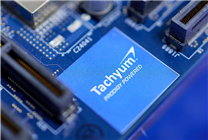
Tachyum, a disruptor in the semiconductor industry, has made headlines for its ambition to redefine processor capabilities. The company has developed a revolutionary processor, the Prodigy series, which integrates CPU, GPU, and TPU functionalities into one homogeneous architecture. Promising to outpace established giants like AMD, Intel, and NVIDIA, Tachyum boasts performance metrics that are hard to overlook.
Launched in 2018, the Prodigy series claimed performance improvements of up to 18.5 times over competing products while reducing power consumption by 7.5 times. Last November, the company introduced its latest iteration, the Prodigy processor, built on a cutting-edge 2nm process. This remarkable chip aims to achieve a staggering 1000 PFLOPS performance, significantly outstripping the capabilities of traditional x86 chips and offering six times the high-performance computing (HPC) power of leading GPUs.
Technological Highlights of the Prodigy Processor:
- Up to 1024 cores with maximum frequencies reaching 6 GHz.
- Compatibility with 24 channels of DDR5-17600 memory and PCIe 7.0, pushing the boundaries of performance in computing hardware.
- AI capabilities that purportedly outperform NVIDIA’s high-end Rubin products by a factor of 22.3.
Despite such impressive technology claims and announcements of significant venture capital funding—totaling $220 million—and $500 million in product orders, Tachyum’s operational reality tells a different story. The company’s inability to maintain financial stability has resulted in serious challenges, including eviction from their offices due to unpaid rent and failure to compensate employees, leading to dual lawsuits.
While Tachyum has offices and branches in multiple regions worldwide, including virtual spaces, the sustainability of these offices remains in question. Many institutions have shifted towards shared workspaces, and physical locations in the U.S. have been reduced significantly.
In light of their current predicament, Tachyum’s leadership has expressed determination to negotiate with investors to settle their outstanding debts. Their resilience is notable; however, the road ahead will require agile strategies to fulfill their promises to stakeholders.
Conclusion
Tachyum is a company with groundbreaking technological innovations, yet stands at a precarious juncture. As the semiconductor market continues to evolve, the future remains uncertain for Tachyum’s ambitious plans. Bridging the gap between cutting-edge technology and financial viability will be crucial if the company hopes to be a contender in a space dominated by well-established giants.
In summary, while Tachyum’s advancements in processor design are commendable, their current operational challenges signal a need for renewed focus on financial management to propel their innovations forward.