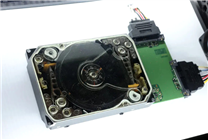

Western Digital Unveils Groundbreaking High-Bandwidth Hard Drive Technology
Summary
- Western Digital introduces a new roadmap for mechanical hard drives, including a plan to reach capacities of up to 100TB by 2029.
- The company’s innovative high-bandwidth drives utilize multi-channel parallel processing, significantly enhancing performance metrics.
- With an emphasis on both performance and energy efficiency, these drives are strategically positioned for data centers and high-demand applications.
On February 4, Western Digital announced a transformative technology roadmap for its mechanical hard drives, focusing on advancements that promise not only higher capacities but also improved performance metrics. This exciting development signals a new era in data storage, emphasizing both speed and power efficiency.
High-Capacity Drive Roadmap
At the forefront of this initiative is the implementation of energy-assisted perpendicular magnetic recording (ePMR) technology. Western Digital plans to introduce hard drives with notable capacities—culminating in a staggering 60TB. By the second half of this year, the first UltraSMR hard drives, boasting capacities of 40TB, are set to hit the market. Furthermore, the company anticipates the launch of heat-assisted magnetic recording (HAMR) technology by 2027, paving the way for 100TB drives anticipated by 2029.
These advancements cater specifically to two distinct series of products:
- High-Performance Drives: Designed for applications with demanding IOPS (Input/Output Operations Per Second) requirements.
- Energy-Efficient Drives: Prioritizing low power consumption while maintaining consistent performance.
Despite the widespread adoption of NAND flash memory in the consumer sector, mechanical hard drives maintain a crucial role in data centers owing to their cost-effectiveness and high single-disk storage capacity.
Introduction of High-Bandwidth Hard Drive Technology
To meet the growing demands of data processing, Western Digital has introduced its cutting-edge “high-bandwidth hard drive” technology. By leveraging a sophisticated three-level actuator system, the company has achieved multi-channel synchronous access along with multi-track parallel reading and writing capabilities. This innovative approach enhances performance while ensuring that the total cost of ownership (TCO) remains manageable.
The initial rollout of this technology will start with 50TB drives, and there are plans to incorporate 8-track parallel processing in future 100TB versions. This transition is expected to lead to significant improvements in I/O bandwidth—up to eight times that of conventional hard drives.
High-bandwidth drives come in two configurations:
- Multi-Head Drives: Utilizing multiple read and write heads for simultaneous operations, effectively doubling the bandwidth compared to traditional models.
- Dual-Drive Systems: Featuring an independent second drive that likewise enhances overall bandwidth and sequential I/O performance.
By merging these two technologies, Western Digital envisions amplifying bandwidth capabilities up to eightfold, while simultaneously quadrupling I/O performance within a single hard drive.
Energy-Efficient Solutions on the Horizon
In addition to high-performance options, Western Digital is committed to developing power-optimized mechanical hard drives. These next-generation drives are expected to consume 20% less power than their predecessors, aligning with modern demands for sustainable technology. Customer certification for these efficient products is anticipated by 2027.
Conclusion
Western Digital’s recent announcements highlight the company’s commitment to advancing hard drive technology, making significant strides in both capacity and performance. The introduction of high-bandwidth drives signifies a noteworthy shift for industries relying on robust data storage solutions, particularly those in high-demand environments like data centers. With the dual focus on performance and energy efficiency, Western Digital is poised to redefine the landscape of mechanical hard drives, ensuring that data storage continues to evolve in tandem with burgeoning technological demands.