
Samsung Galaxy S27 Ultra: Revolutionizing Face Recognition with Polar ID Technology
Summary:
- Samsung is set to reintroduce advanced facial recognition technology in the Galaxy S27 Ultra.
- The innovative Polar ID solution offers enhanced security without requiring extensive hardware space.
- This technology promises faster unlocking times and lower costs, paving the way for broader adoption in mid-range devices.
In a dramatic shift within the biometric landscape, Samsung has once again turned its attention to facial recognition technology. Following its initial foray with the Galaxy S8 series in 2017, the tech giant has been relatively quiet in this arena since moving away from iris scanning in favor of fingerprint solutions. However, recent industry insights indicate that the upcoming Galaxy S27 Ultra is set to introduce a groundbreaking new solution known as Polar ID, which is poised to surpass Apple’s Face ID.
A Breakthrough in Facial Recognition
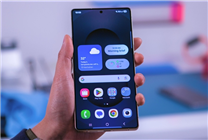
The innovative Polar ID technology leverages polarized light imaging for facial recognition, eliminating the need for complex 3D depth mapping systems. This allows Samsung to innovate without compromising design. Unlike Apple’s facial recognition setup, which necessitates substantial hardware components that disrupt screen aesthetics, Polar ID maintains a sleek front-facing single-hole design.
The technology operates by emitting infrared light towards the user’s face. This light reflects back, but not before passing through a specialized meta-optical element that filters the reflection. Concurrently, dedicated sensors capture both the visual image and the unique polarization state of the reflected light. This dual approach ensures that distinguishing between live faces and inanimate objects—like masks or photographs—is extraordinarily precise, significantly reducing the potential for false identification.
Technical Excellence Meets User Experience
One of the standout features of Polar ID is its efficiency. With an estimated unlocking response time of just 180 milliseconds, users will experience swift access that rivals established systems. Moreover, the technology performs equally well in various conditions—whether users are wearing masks, glasses, or are exposed to challenging lighting situations, the recognition rate remains impressively stable.
This advancement not only enhances the user experience but also underscores the technical prowess of Samsung’s engineering team. With Polar ID, the company aims to set benchmarks for speed and reliability, positioning the Galaxy S27 Ultra as a formidable contender in the smartphone market.
Cost-Effective and Future-Ready
An exciting aspect of the Polar ID technology is its cost efficiency. Speculation suggests that the production hardware costs will be considerably lower than those associated with existing facial recognition systems. This positions Polar ID as a viable option not just for flagship devices like the Galaxy S27 Ultra, but also for mid-range smartphone models in the future. Consequently, the democratization of high-security face unlocking technology is likely within reach, catering to a broad audience eager for advanced features without exorbitant price tags.
Conclusion
Samsung’s return to the facial recognition sphere with its cutting-edge Polar ID technology marks a significant step forward in both biometric security and design innovation. By prioritizing a seamless user experience and robust security measures, Samsung is redefining the norms of smartphone technology. As consumers increasingly gravitate toward devices that blend functionality with aesthetic appeal, the Galaxy S27 Ultra stands out as a hallmark of these evolving expectations.
With its launch on the horizon, all eyes will be on how this technology performs in the real world, setting the stage for future innovations in biometric systems across the industry.