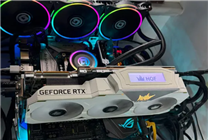

Summary:
- Jiachen Liu successfully modified an RTX 2080 Ti HoF, integrating an RTX Titan core and boosting power consumption to 900W.
- The enhanced graphics card achieved an impressive 18,038 points in the 3DMark TimeSpy Extreme benchmark.
- This modification surpasses the performance of the RTX 3090, signaling a potential for future advancements in single-card capabilities.
Transforming Graphics Power: The RTX 2080 Ti HoF Modification
In the world of hardware modifications, few projects have garnered as much attention as Jiachen Liu’s recent endeavor. He has successfully transplanted an RTX Titan core into a high-end non-public version of the RTX 2080 Ti Hall of Fame (HoF). This extraordinary feat saw the power consumption limit surge from 300W to an eye-popping 900W, pushing the boundaries of graphics performance.
The Original Constraints of the RTX 2080 Ti
While the native RTX 2080 Ti is a formidable card in its own right, it falls short when compared to the full potential of the TU102 core utilized in the RTX Titan. The Titan features a total of 4608 CUDA cores and boasts 24GB of GDDR6 video memory—attributes that set it apart from its 2080 Ti counterpart. Due to NVIDIA’s limitations, the Titan has never been available in a non-public version optimized for extreme power and cooling enhancements.
Unleashing the Titan Core
This innovative transplant takes advantage of the superior power supply and cooling systems available with the Hall of Fame PCB. Liu’s modifications stabilize the core frequency at an impressive 2150MHz, enabling the full potential of the Titan core to be realized. Such performance levels are unattainable with the original Titan RTX board and cooler.
Actual benchmark tests reveal that this modified RTX 2080 Ti HoF, now referred to as the Super Titan RTX, achieved a remarkable score of 18,038 in the 3DMark TimeSpy Extreme test.
Performance Comparison: A Game Changer
To put these results into perspective, it’s essential to examine traditional performance metrics. In SLI mode, two Titan RTX graphics cards average approximately 17,000 points, while the RTX 3090 averages around 14,000 points. Remarkably, Liu’s modified single-card performance surpasses that of the RTX 3090 and approaches the combined output of two Titan RTX cards.
This achievement not only showcases the capabilities of the modified card but also raises intriguing questions about future possibilities. Should advancements in SLI technology allow for the connection of two of these modified cards, we could potentially witness performance that exceeds the capabilities of the forthcoming RTX 5090 during liquid nitrogen overclocking sessions.
A New Era of Graphics Performance
The implications of this modification extend beyond mere bragging rights in gaming circles. The success of Liu’s project highlights a burgeoning area of interest within the hardware community—extreme performance tuning and customization. As enthusiasts continue to push the boundaries of what is possible with existing technology, the landscape of graphics performance is rapidly evolving.
Moreover, the rise of content creation and increasingly demanding applications provides fertile ground for such innovations. A graphics card like Liu’s modified RTX 2080 Ti HoF can offer considerable advantages in rendering, 3D modeling, and even machine learning tasks, making it a worthwhile investment for professionals alike.
In conclusion, Jiachen Liu’s groundbreaking modification of the RTX 2080 Ti HoF serves not only as a testament to the ingenuity of hardware enthusiasts but also as a beacon for a future where customization leads to unprecedented performance metrics. As the possibilities for graphics technology continue to expand, it will be fascinating to observe how far these innovations can push the performance envelope.