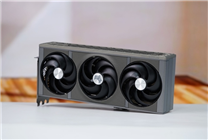

AMD Shifts GPU Supply Strategy: Focus on Radeon RX 9070 XT
Summary:
- AMD adjusts GPU production strategy, prioritizing Radeon RX 9070 XT over RX 9070.
- Rising memory costs impact profit margins, leading to strategic shifts in pricing.
- RX 9070 sales lag behind the XT model due to minimal pricing difference.
On January 18, reports surfaced regarding AMD’s changes to its GPU supply strategy, prompted by NVIDIA’s adjustments in graphics card availability. This shift highlights AMD’s focus on aligning product priority with market demands and production costs.
AMD has recently decided to emphasize the production of the Radeon RX 9070 XT over its non-XT counterpart. This change is significantly influenced by the rising costs of memory, which have been affecting graphics card manufacturing overall.
All three models—RX 9060 XT, RX 9070, and RX 9070 XT—are equipped with 16GB of GDDR6 video memory, requiring identical graphics memory chips. This uniformity implies that the expense associated with memory hardware is consistent across these models. However, the RX 9070, being a non-XT version, has lower performance specifications. Consequently, it is priced below the XT version, which constricts profit margins for manufacturers.
Focusing on the high-performance XT model allows manufacturers to better manage the impacts of increasing graphics memory costs, leveraging higher profit margins to cushion against frequent price adjustments. This strategy aids in maintaining competitive pricing while ensuring profitability.
Market dynamics illustrate the RX 9070’s challenging positioning. Launched at $549, its pricing is marginally cheaper than the RX 9070 XT, which retails for $599. Given this minimal price difference, consumers tend to favor the more powerful XT version, leading to a dramatic disparity in sales. Reports indicate that the RX 9070 holds a mere one-tenth of the popularity of its XT counterpart.
Despite this strategic pivot, it’s essential to note that the RX 9070 is not being phased out. Instead, AMD is simply adjusting its production focus to better align with market trends and profitability objectives.
As the GPU market continues to evolve, AMD’s shift emphasizes the need for adaptive strategies in response to fluctuating costs and consumer preferences. The prioritization of the RX 9070 XT not only addresses current market demands but also underscores the importance of aligning product offerings with price competitiveness.
In summary, AMD’s recent strategy indicates a keen awareness of market forces, leveraging the strengths of its high-performance models while navigating the complexities of manufacturing costs. This approach positions AMD to better compete in an ever-changing landscape where consumer preferences and pricing play crucial roles.