
NVIDIA Acquires $5 Billion Stake in Intel: Implications for the Tech Industry
Summary:
- NVIDIA has completed a $5 billion investment in Intel, acquiring 214.7 million shares at $23.28 each.
- This partnership will focus on integrating NVIDIA GPUs into Intel’s product lines, marking a significant shift in the tech landscape.
- The anticipated ‘Super SoC’ featuring integrated RTX GPUs could reshape the market dynamics for PC gaming and graphics processors.
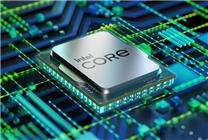
NVIDIA recently made headlines by announcing the acquisition of a $5 billion stake in Intel, a strategic move solidified by a prior cooperation agreement between the two technology giants. This transaction, executed at a price of $23.28 per share, results in NVIDIA holding 214.7 million shares of Intel, marking a significant investment in a key player in the semiconductor market.
This transaction is Intel’s second major influx of capital this year, following an $11.1 billion investment from the U.S. government that took place in August. With this latest development, NVIDIA emerges as a prominent stakeholder in Intel, underlining the growing collaboration between these two major companies.
Significantly, the U.S. Federal Trade Commission has recently approved the deal, clearing it of antitrust concerns. The formal completion of this investment sets the stage for a transformative partnership aimed at innovation in computing technology.
Despite the strategic significance of the deal, NVIDIA’s stock experienced a 1.3% decline in pre-market trading, while Intel’s share price remained stable. Nevertheless, the mutual benefits of this collaboration promise to be substantial in the long run.
Key aspects of the partnership focus on two main collaboration directions. First, NVIDIA plans to customize Intel’s CPUs specifically for its advanced AI platform, with NVIDIA taking the lead as the primary developer. Second, Intel will integrate NVIDIA’s GPUs into its systems, venturing into the production of RTX GPU SoC processors. This component of the agreement places NVIDIA in a supplier role, while Intel takes charge of the integration and market distribution.
Both companies have confirmed that their respective product lines will remain unaffected. NVIDIA will continue to advance its ARM processors, while Intel will not abandon its Arc independent graphics division. This separation of product lines ensures that both companies can innovate without compromising their existing technology portfolios.
For PC gamers, the highlight of this collaboration is undoubtedly the integration of Intel processors with NVIDIA’s RTX GPUs. This groundbreaking development, referred to as the ‘Super SoC,’ holds the potential to disrupt the current graphics market, threatening the dominance of independent graphics solutions from competitors, particularly AMD.
The arrival of this innovative product is eagerly anticipated within both the notebook and desktop markets. However, one of the critical questions remains: how soon will these products hit the shelves? Initial industry analyses suggest that 2027 could be the target date.
Yet, it is essential to note that NVIDIA has already attained solutions based on ARM CPUs featuring integrated GPUs comparable to an RTX 5070 level. Transitioning this technology to Intel’s x86 architecture is considered feasible, with projections pointing to a possible release as early as 2026.
Despite the promising outlook, the outcomes of this partnership will become evident within the next year. As the memory SSD market continues to soar, gamers and tech enthusiasts may prefer to adopt a wait-and-see approach before making any significant investments.
This collaborative venture between NVIDIA and Intel marks a pivotal moment in the semiconductor industry, forecasting an era of unprecedented innovation. As companies aim to push the boundaries of technology, this partnership could either set new benchmarks or flip the conventional market dynamics on their head.