
Breakthrough 5D Glass Storage Technology: A Game Changer for Data Centers
Summary:
- SPhotonix’s 5D glass storage can hold 360 TB of data with a lifespan of 13.8 billion years.
- The technology addresses the increasing demands for cold data storage in global data centers.
- Major competitors include Microsoft’s Project Silica and Cerabyte, each with distinct approaches to optical storage solutions.
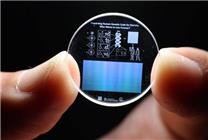
In the realm of data storage, a revolutionary breakthrough is on the horizon—British startup SPhotonix is preparing to introduce its groundbreaking 5D glass storage technology, set to transition from laboratory tests to real-world applications in data centers within two years. Developed in collaboration with the University of Southampton, this technology promises an impressive storage capacity of 360 terabytes (TB) on a single 5-inch glass disk, with unparalleled longevity, boasting a lifespan of up to 13.8 billion years at 190°C—comparable to the age of the universe itself.
The Challenge of Cold Data Storage
Today’s global data centers are faced with a colossal challenge: an estimated 60% to 80% of the world’s stored data consists of "cold data," which is rarely accessed. Traditional backup media such as tapes and optical disks typically offer a lifespan ranging from a mere 5 years to 1,000 years, making them less reliable than quartz glass options. As organizations grapple with long-term data management strategies, SPhotonix’s innovative solution stands out in comparison to rival endeavors like Microsoft’s Project Silica and Cerabyte’s ceramic-based storage.
Innovations in Data Encoding
The core of SPhotonix’s 5D memory crystal technology lies in its use of femtosecond laser pulses, etching nanoscale three-dimensional pixels within fused silica glass. This enables a unique 5D data encoding method that combines three-dimensional spatial coordinates with optical direction and intensity, allowing each pixel to store up to 8 bits of data. Such efficiencies result in a staggering capacity on a flat, 5-inch disk, capable of holding 360 TB. For context, this surpasses the capacity of mainstream LTO-7 tape, which accommodates only 6 TB per reel—necessitating 60 tapes for the equivalent storage.
Overcoming Speed Limitations
Despite its impressive durability, the current writing speed of SPhotonix’s 5D technology is 4MB/s, with reading speed peaking at 30MB/s, a stark contrast to the 300MB/s writing speed of the LTO-7 tape. To address this issue, SPhotonix aims to boost read and write speeds to 500MB/s within the next three to four years, an essential step to meet the stringent performance requirements of enterprise-level archiving systems. An on-site reading device is also slated for development within 18 months, although data access currently remains limited to laboratory environments.
Competitive Landscape in Optical Storage
As the optical storage industry evolves, SPhotonix finds itself amidst formidable competition from Microsoft and Cerabyte. Microsoft’s Project Silica, which also utilizes glass media, has garnered attention for its research and testing outcomes. Meanwhile, Cerabyte is pursuing a different course with its ceramic substrate solution, announcing ambitions to achieve a storage capacity of 100 petabytes in a single cabinet and a transmission rate of 2GB/s by 2030, all with a remarkable 5,000-year data retention capability.
Addressing Cost Challenges in Data Management
SPhotonix clearly targets cold data storage applications—where archived data may have access times exceeding 10 seconds—distinguishing it from hot data (requiring responses within 5 milliseconds) and warm data (with response times between 20 milliseconds to 1 second). Organizations stand to benefit significantly from reducing three major cost burdens: the need for media migration every five to ten years, environmental control for traditional media, and energy consumption for storage maintenance. The attributes of both Cerabyte’s ceramics and SPhotonix’s glass solutions promise substantial advancements in long-term storage strategies.
A Shift in Enterprise Data Management Strategies
The implementation of SPhotonix’s 5D technology represents new options for enterprises seeking to optimize cold data management. In its initial pilot phase, the glass storage system will complement existing tape libraries, significantly benefiting sectors like finance, medical, and scientific research that demand long-term data retention. As the technology matures, cost reductions and performance enhancements might redefine standards in data archiving.
Bridging the Gap to Commercialization
Founded as a spin-off from the University of Southampton in 2024, SPhotonix is on the cusp of transitioning its technology from research to commercialization. Upcoming pilot programs will be pivotal in assessing the technology’s viability and performance. Enterprise users should closely monitor key factors including onsite deployment readiness, cost-effectiveness compared to traditional tape solutions, and compatibility with existing data management software.
As the exponential growth of global data continues, are enterprises prepared to embrace this pioneering model of "write once, save for billions of years"? The shift in strategic thinking regarding data asset management could well be on the horizon.