
Moore Thread Unveils Groundbreaking Lushan Graphics Chip at 2025 MUSA Developer Conference
Summary:
- The Lushan graphics chip promises significant advancements in gaming and design rendering, enhancing performance across key metrics.
- With the integration of the new Huagang architecture, the chip aims to reshape the competitive landscape for high-performance graphics solutions.
- A consumer-focused graphics card is anticipated, expected to surpass existing models in performance.
At the recent Moore Thread 2025 MUSA Developer Conference, significant strides in graphics technology were unveiled with the introduction of the Lushan graphics chip, developed based on the revolutionary Huagang architecture. This state-of-the-art chip not only signifies a leap in gaming technology but also positions itself as a versatile tool for graphic design applications.
Incredible Performance Enhancements
The Lushan chip is set to transform the experience of 3A game rendering, boasting a remarkable 15x improvement in performance. Additionally, its ray tracing capabilities are an astounding 50 times more efficient, displaying Moore Thread’s commitment to pushing the boundaries of graphics technology. Furthermore, atomic memory access performance has been enhanced 8 times, while the capacity for video memory has quadrupled, creating new possibilities for developers and gamers alike.
The advancements extend beyond gaming. The Lushan chip offers an AI rendering performance increase of 64 times. Its geometry processing performance has been boosted by 16 times, alongside a 4 times enhancement in texture filling capabilities. This level of performance not only elevates gaming graphics but also significantly benefactors CAD (Computer-Aided Design) and CAE (Computer-Aided Engineering) rendering applications.
Future Outlook
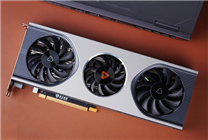
According to official announcements, consumers can expect the release of a new graphics card that will not only cater to gaming enthusiasts but will also introduce innovations tailored to everyday users. This upcoming card is projected to outperform the existing MTT S80 graphics card, making significant waves in the market.
The Huagang architecture serves as a cornerstone of Moore Thread’s latest developments. This architecture incorporates a new generation of instruction sets, supporting asynchronous programming models and efficient thread management. Compared to the previous year, the computing power density is set to increase by 50%, while energy efficiency will soar by an impressive 10 times. This commitment to efficiency not only promises performance enhancements but also reflects a growing emphasis on sustainability in technology.
Conclusion
The introduction of the Lushan graphics chip at the MUSA Developer Conference underscores Moore Thread’s vision of shaping the future of graphics technology. With its prowess in gaming and design rendering, along with a promising consumer offering on the horizon, the Lushan chip is poised to redefine the benchmarks of high-performance graphics.
Stay tuned for more updates as this technology paves the way for future innovations in both gaming and professional design tools.