
### Summary
– Micron’s financial report for Q1 FY 2026 shows record revenues driven by demand for high-performance storage and AI data centers.
– The company anticipates continued DRAM supply shortages, with production capacity expansion efforts underway.
– Micron’s leadership is reacting to customer concerns over long-term memory supply with multi-year agreements.
### Micron Technology Reports Impressive Financial Growth Amid Supply Challenges
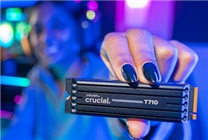
Micron Technology recently released its financial report for the first quarter of fiscal year 2026, revealing extraordinary growth in the semiconductor market. The company, which has shifted its focus away from the Crucial brand consumer business, announced that its revenue reached a substantial $13.64 billion—an impressive 57% increase compared to the same period last year.
This remarkable growth can be attributed predominantly to the robust demand for high-performance storage solutions, specifically in AI data centers, combined with a sustained rise in market prices. As technology continues to evolve, the appetite for performance-driven storage solutions has inflamed, driving this unprecedented increase in revenue.
High Bandwidth Memory (HBM) is another vital contributor to Micron’s success. The company forecasts a “strong growth” trajectory for its HBM revenue, predicting that the HBM market will soar to $100 billion by 2028. This projection indicates that HBM sales will surpass the entire DRAM market by 2024, signifying a pivotal shift in the industry landscape.
### Addressing Supply and Demand Imbalances
To alleviate the extreme supply-demand imbalance in the market, Micron is ramping up production to full capacity. The company is investing heavily in expanding its manufacturing capabilities with the introduction of two new wafer fabrication plants (fabs) in Idaho, scheduled to begin operations in mid-2027. Furthermore, another fab in New York is set to break ground in early 2026, although full production capacity will not be achieved until 2030.
Despite these ambitious plans for expansion, Micron’s CEO Sanjay Mehrotra expressed disappointment, stating that even post-expansion, the company would only be able to meet “one-half to two-thirds” of its core customers’ memory needs. This projection underscores the severity of the ongoing supply shortage within the industry.
### Customer Concerns and Long-Term Strategies
In response to the prevailing uncertainty regarding memory supply, Micron’s customers have voiced concerns about the long-term availability of DRAM products. To safeguard their future storage needs, many clients are opting to enter into multi-year supply agreements, ensuring they can secure the necessary components in an increasingly competitive market.
This proactive approach by Micron reflects the company’s commitment to addressing customer anxieties while simultaneously striving to align supply capabilities with escalating demand. As the semiconductor industry continues to innovate, the importance of reliable supply chains and future-proof strategies couldn’t be more apparent.
### Conclusion
Micron Technology is navigating a landscape marked by soaring demand for high-performance storage and persistent supply shortages. While the company reports remarkable financial results, the challenges ahead are clear. Micron’s efforts to expand its manufacturing capacity and establish long-term agreements with customers are crucial steps in solidifying its position in an evolving market.
As technology fuels the appetite for advanced memory solutions, Micron stands at the forefront, prepared to adapt and thrive in the face of ongoing challenges. The path forward will be shaped by strategic investments and a deep understanding of customer needs, setting the stage for continued success in the semiconductor industry.