
The Emergence of Russia’s Irtysh C616 Chip: A New Era in Independent Computing
Summary:
- Russia’s Tramplin Electronics demonstrates the Irtysh C616 chip, based on China’s Loongson architecture, marking a shift in independent computing capabilities.
- This launch signifies a move away from reliance on U.S. technologies and a step towards a multi-polar technology landscape.
- The collaboration between China and Russia highlights the significance of establishing a self-sufficient technological infrastructure.
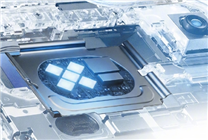
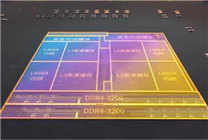
On December 12, 2022, Tramplin Electronics Holdings publicly showcased the Irtysh C616, a server chip utilizing the Chinese Loongson architecture with its LA664 core. While at first glance this may appear simply as a new product launch, it actually reveals a profound shift in the global technological landscape driven by geopolitical pressures.
A Response to Geopolitical Challenges
For both China and Russia, the need for independent computing capabilities has transitioned from a long-term vision to an immediate necessity. Historically, increasing sanctions from the United States targeting high-end semiconductor technologies, Electronic Design Automation (EDA) tools, and intellectual property licensing have hampered Russia’s technological growth. The phenomenon of repurposing everyday electronics for tech components, often referred to as “taking apart microwave ovens to get chips,” symbolizes a nation constrained by core technology limitations.
The landscape of Russian computing has experienced significant setbacks with the failure of the Baikal processor, grounded in ARM licensing, which faced challenges from architectural licensing and OEM manufacturing. Moreover, despite attempts to establish the Elbrus independent instruction set, its weak compilers and lack of ecosystem integration rendered it ineffective for national infrastructure needs. Consequently, Russia has progressively found itself deviating from mainstream global technology advancements.
The Significance of Irtysh C616
In this context, the launch of the Irtysh C616 takes on heightened importance. Leveraging the Dragon architecture LA664 core, this chip signifies a feasible, controllable, and sustainable technological pathway for Russia. The Dragon architecture’s independence from U.S. regulatory frameworks enables an increasingly mature ecosystem of supporting software, including compilers and operating systems.
This collaboration not only equips Russia with technological infrastructure but also with a platform that promises reliability and resilience. In a climate of severe international technological competition, such sustainable solutions carry strategic weight.
Shifting to a Multi-Polar Landscape
Traditionally, global computing systems have been dominated by American technologies, particularly the x86 and ARM architectures. This concentration has created vulnerabilities, making countries susceptible to adverse impacts from licensing restrictions or technology updates. Today, both China and Russia are pioneering the Dragon architecture within their critical infrastructure, proposing an alternative model that is entirely independent from U.S. and European technologies.
Consequently, the global computing landscape is evolving towards a triadic model, integrating x86, ARM, and Dragon architectures. As a result, the monopolistic hold of U.S. and Western technology is beginning to loosen, paving the way for more diverse and competitive frameworks.
Impacts on Developing Nations
The ramifications of this technological trend extend beyond Russia and China, particularly for developing nations involved in the Belt and Road Initiative. These countries face similar technological dilemmas, necessitating modern information systems while simultaneously mitigating risks of sanctions and supply disruptions. The Dragon architecture offers a viable alternative that does not depend on cutting-edge manufacturing processes; using a 14nm process, the LA664 core achieves levels of performance comparable to mainstream desktop products from a few years ago, meeting essential industry needs.
In the near future, we could see a dual-tier development in global information technology systems, with the U.S. and Western nations predominantly using x86 and ARM, while Belt and Road countries pivot towards the Dragon architecture.
Collaborative Advancement in Technology
The software ecosystem supporting Dragon architecture, previously established mainly by Chinese firms, is now being strengthened by Russian investments in local CAD companies and software teams. This collaboration is set to fortify the foundational weaknesses in software and professional applications associated with the Dragon architecture, bolstering its global relevance.
The investment from both nations signifies a collaborative avenue for growth, as technologists from differing backgrounds come together to build a richer, more effective ecosystem.
Economic Implications and Future Directions
The rise of the Irtysh C616 also has significant economic implications. Loongson’s LA664 core is at the forefront of delivering performance metrics equivalent to leading-edge processors like Intel’s Core and mainstream Xeon products in the server market. Unique in its ability to license its technology to external partners, Loongson stands as a pioneer among Chinese chip designers.
With the anticipated mass production of the Irtysh C616 and potential expansion into various sectors, both Loongson and Tramplin Electronics Holdings are positioned to generate robust, sustainable revenue streams.
Conclusion
The advent of the Irtysh C616 serves as a pivotal moment for Russia, marking a critical step towards overcoming technological isolation and reestablishing an independent system. For China, it represents a significant milestone in propagating its independent instruction set on a global stage. Collectively, this development heralds a more diversified, resilient, and secure computing environment that reflects a transforming international technological landscape.
As the world progresses, the computing landscape is expected to shift from singular dominance by one entity to a more balanced, multipolar structure, warranting close attention and analysis from the global community.