
Revolutionary Developments in Neuralink: Mind Control and Beyond
Summary:
- Neuralink, founded by Elon Musk, has made significant advancements in brain-computer interface (BCI) technology, showcasing capabilities such as mind-controlled robotic arm movements.
- The company is initiating upgrades in existing implants and exploring new applications for users, enhancing both medical and daily life integration.
- With successful human trials and FDA certifications, Neuralink is moving towards more complex neural functions, aiming to radically improve quality of life for individuals with disabilities.
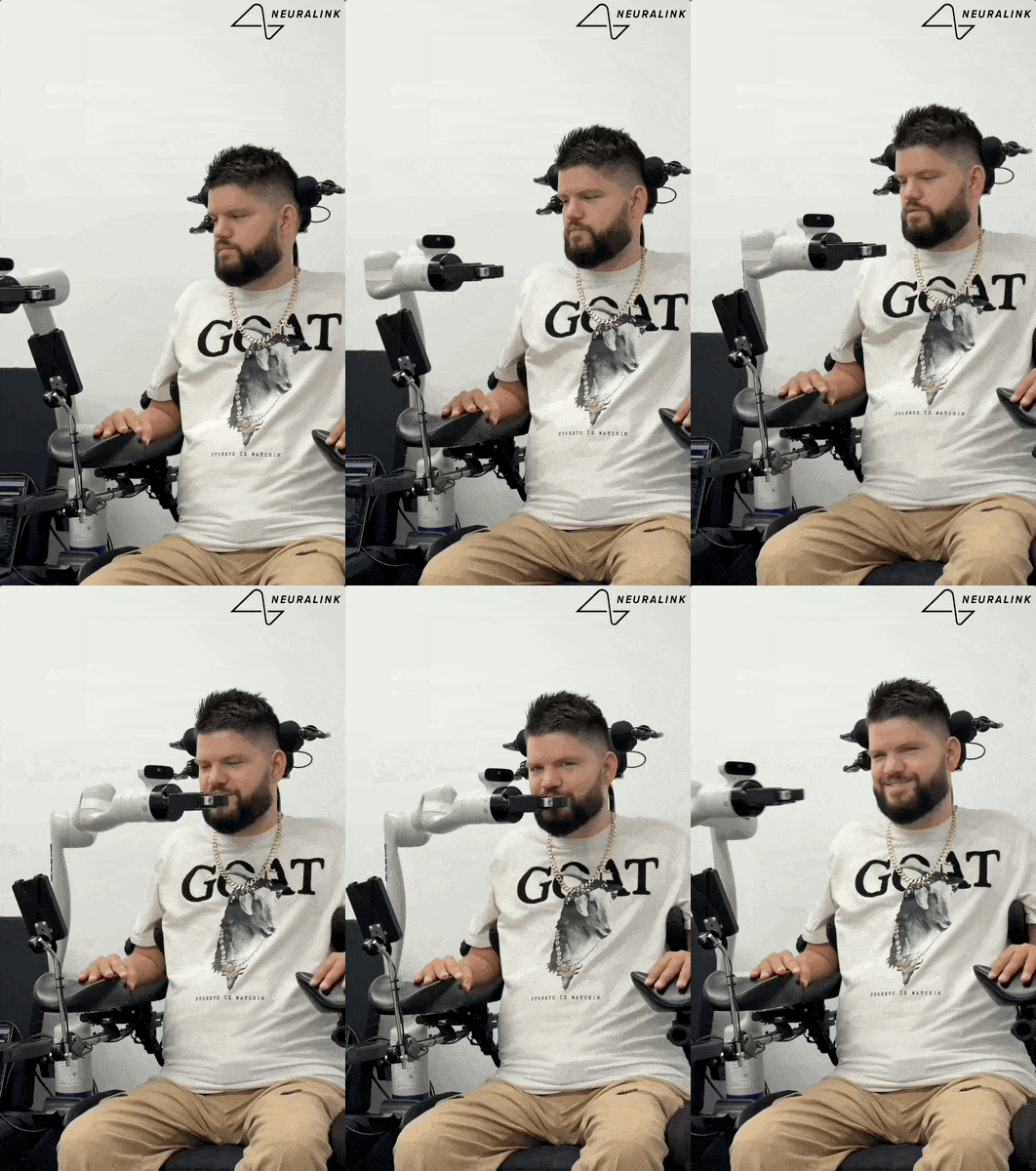
In recent advancements, Neuralink, the pioneering brain-computer interface company founded by Elon Musk, has demonstrated remarkable developments that merge neuroscience with technology. The company released footage showcasing a demonstrator who achieved mind control of a robotic arm, a significant milestone in BCI technology. In the video, the robotic arm was skillfully maneuvered to interact with the demonstrator, illustrating the profound potential of these advancements.
Future of Mind Control: Upgraded Trials
Neuralink is now progressing toward an upgraded trial procedure where the first human subject, Noland Arbaugh, is set to undergo a second surgery. This new phase will incorporate a "double implant" strategy, retaining the existing cranial implant while introducing a new port in the spinal cord. The aim of this innovation is to create a "digital neural bridge." The function of the brain chip involves decoding movement intention, while the spinal cord chip facilitates nerve stimulation directly, bypassing damaged pathways to help restore mobility for paralyzed patients.
A significant aspect of this experiment involves improving hardware stability. Previous challenges such as electrode wire retraction, which resulted in signal degradation due to intracranial gaps, have been addressed by carefully controlling implant placement and optimizing surgical strategies. These modifications are critical in ensuring long-term signal fidelity and reliability.
Expanding Beyond Medical Boundaries
Neuralink’s research is not confined to clinical trials alone; subjects are actively exploring diverse applications of BCI in everyday life. Brad Smith, Neuralink’s third human subject, exemplifies this initiative. Despite mastering the use of a computer cursor through thought, he quickly recognized that his physical limitations, stemming from ALS, hindered his ability to engage fully with technology.
Rather than waiting for customized medical solutions, Smith undertook personal research, incorporating a consumer webcam into his setup. With assistance from the Neuralink team, he adjusted the control system to operate the camera via imagined hand movements, effectively overcoming his physical constraints. This user-led exploration highlights an emerging trend in the BCI community where individuals are combining expensive implants with affordable technologies to regain agency over their interactions with the environment.
Significant Milestones Achieved
Neuralink has made remarkable strides over the past two years. The company successfully completed its first human implant surgery in January 2024, integrating its BCI chip, N1, into a patient with high-level paralysis. Following the surgery, the patient demonstrated the ability to control a computer mouse using thoughts, marking a critical milestone in practical BCI applications.
With the successful completion of surgeries for multiple subjects, Neuralink has amassed over 15,000 hours of operation without major complications, showcasing the technology’s reliability. Additionally, two significant FDA certifications for projects aimed at visual restoration and speech assistance have heralded Neuralink’s commitment to improving life for those with severe disabilities.
As the company continues its work, its expanding focus will encompass complex neural functionalities, targeting areas such as language and vision to elevate its impact on users’ lives.
Looking Ahead: The Future of Neuralink and BCI
Neuralink’s ambitious plans extend beyond the present; the company envisions enhancing data transmission capabilities through multi-implant architectures, increasing users’ reaction speeds and digital interaction efficiency. This future holds potential not only for medical applications but also for broader uses that can profoundly change human-computer interactions.
As Neuralink delves deeper into evolving BCI technology, the implications of its innovations will reshape not just medical practices, but how society integrates with technology. Users like Smith and Copeland illustrate that BCIs are not solely tools for rehabilitation, but gateways to regained autonomy, enabling individuals to navigate the world with greater independence.
Through continuous research, trials, and technological refinements, Neuralink is poised to redefine the intersection of neuroscience, technology, and daily life. As advancements continue, the dream of a future where mental intent seamlessly translates into action is rapidly becoming a reality.
In summary, Neuralink’s journey is a testament to the unwavering pursuit of innovation, laying the groundwork for potential transformative applications that could enhance the human experience in unprecedented ways. The evolving landscape of brain-computer interfaces promises exciting developments ahead, as the line between biology and technology becomes increasingly blurred.