
The Future of AI Chips in China: Nvidia’s H200 and Market Movements
Summary:
- Chinese AI chip revenue remains stagnant, with zero expected sales in the near term.
- The U.S. government may permit Nvidia to sell its advanced H200 chips to China, despite existing export restrictions.
- The H200 chip boasts double the performance of its predecessor, the H20, potentially impacting the competitive landscape.
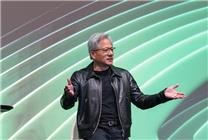
In a recent commentary on the state of AI chip sales in China, Huang Renxun, the CEO of Nvidia, expressed his concerns over the company’s market revenue drying up entirely, predicting zero sales in the upcoming quarters. This stark revelation coincides with ongoing discussions within the U.S. government about potentially easing export restrictions to allow Nvidia to sell its H200 chip in China.
The U.S. Department of Commerce is reportedly re-evaluating its export policies, which could result in significant changes, particularly regarding the sale of high-performance AI chips. While the Department has yet to release an official statement on the matter, insiders suggest that adjustments to current restrictions are on the table.
The H200 Chip: A Game Changer in Performance
Released approximately two years ago, the H200 chip introduces advanced high-bandwidth memory capabilities, surpassing its predecessor, the H100 chip, in speed and efficiency. Estimates suggest that it offers twice the processing power of the widely utilized H20 chip, making it a compelling product for AI developers and manufacturers worldwide.
Huang’s optimism regarding the H200’s potential in the Chinese market is tempered by the current export restrictions. The inability to access Nvidia’s advanced technology hampers China’s domestic producers, including notable firms like Huawei, thus providing Nvidia with a strategic advantage if allowed back into the market.
Impacts of U.S. Export Restrictions
Huang has articulated a profound frustration over these restrictions, noting that while they are designed to inhibit China’s technological advancements, they could simultaneously harm U.S. interests. "What impacts China may indeed rebound negatively against the United States," he stated, highlighting the interconnected nature of global tech markets. The stagnation of Nvidia’s sales underscores the challenges companies face in an increasingly restrictive environment.
Despite this, there is a growing wash of optimism regarding possible policy shifts that could reignite Nvidia’s presence in the Chinese market. The renewed ability to sell the H200 chip would not only benefit Nvidia financially but could also play a significant role in leveling the technological playing field relative to domestic competitors, further shaping the global landscape of AI technology.
The dialogue surrounding the potential easing of restrictions is grounded in broader strategic considerations. As China continues to advance in AI development, U.S. policymakers are recognizing the need to support American companies like Nvidia to maintain their competitive edge in an increasingly crowded marketplace.
Future Outlook
The potential for Nvidia’s return to the Chinese market with its H200 chip hinges heavily on evolving U.S. trade policies. Should the Department of Commerce approve the sale, it could mark a significant pivot in U.S.-China tech relations. Furthermore, it might bolster Nvidia’s position not just in China but in global AI markets.
As of now, the stakes remain high. Both domestic and international stakeholders are closely monitoring the situation, recognizing that any changes in policy could have far-reaching implications across the tech industry.
In conclusion, while the immediate outlook for Nvidia in China appears bleak, emerging discussions regarding export controls present a ray of hope. The anticipated performance of the H200 chip could catalyze a new era for AI technologies in China, reinforcing the importance of collaboration amidst geopolitical tensions.
The coming months will be critical as companies navigate through these evolving dynamics, and observers will be keen to see how developments unfold in the complex interplay of international technology trade.