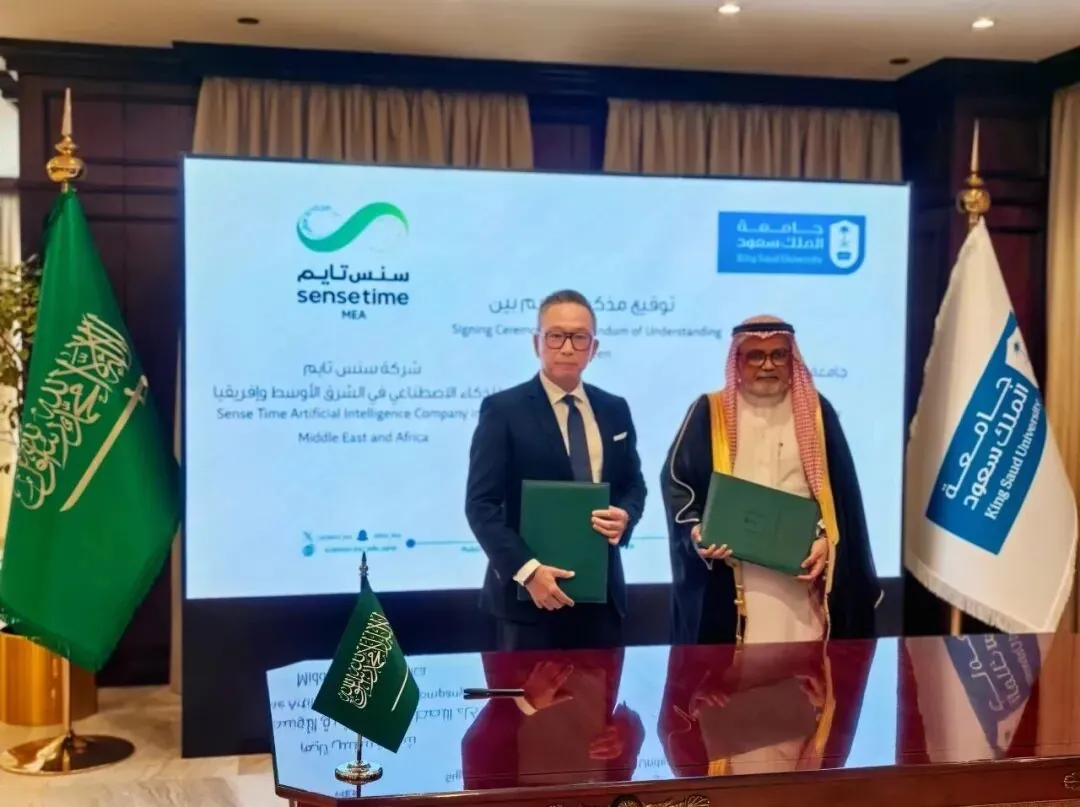

SenseTime and King Saud University Form Strategic Partnership to Advance Local Technology Development
Summary:
- SenseTime Technology has formed a partnership with King Saud University to enhance local technological advancements in Saudi Arabia.
- The collaboration focuses on education, research, and talent training, integrating AI and smart solutions.
- Local computing infrastructure will be established using domestic chips, aiming to improve efficiency and sustainability.
In a significant development for both education and technology sectors, SenseTime Technology has announced a collaborative partnership with King Saud University under its Saudi Arabian subsidiary, SenseTime MEA. This initiative is aimed at constructing local computing infrastructure, which will bolster the development of various sectors including education, cultural tourism, smart cities, healthcare, and energy solutions.
Strategic Alliance for Technological Advancement
This partnership signifies a major commitment to advancing local technological and educational capabilities. SenseTime MEA, a joint venture with Saudi Arabia’s Public Investment Fund (PIF), has been instrumental in navigating the digital landscape in the Middle East. Their focus areas include enhancing smart city infrastructure, fostering intelligent cultural tourism projects, and integrating AI into educational frameworks.
The collaboration will encompass several key aspects:
- Educational Enhancements: Implementation of AI-assisted teaching, intelligent course design, and after-class analysis tools aimed at enriching the traditional educational framework.
- Research and Development: Facilitation of practical project opportunities for students and researchers, creating a robust link between academia and industry.
- Talent Development: Focus on training and nurturing a skilled workforce equipped for the future challenges of technology and innovation.
Building Local Infrastructure with Domestic Chips
One of the standout features of this initiative is the plan to utilize domestic chips to establish a local intelligent computing center. This approach aims to enhance performance and processing speeds while minimizing costs and energy consumption. By developing this local computing infrastructure, SenseTime intends to foster an ecosystem that supports local industrial growth and scientific research, thereby contributing to the overall economic stability of the region.
Although specific details about the domestic chip technology have not been disclosed, it is known that SenseTime has been actively developing its AI chip solutions since 2018. The company successfully completed its first tape-out of STPU chips in 2020 and hinted at advancements in creating a homegrown server CPU, though formal confirmation is still pending.
Financial Outlook and Business Strategy
Recent reports underline the financial health of SenseTime, showcasing a year-over-year revenue increase of 35.6%, reaching approximately RMB 2.358 billion in the first half of the year. The company has also significantly reduced its adjusted net loss by 50% compared to the previous year, demonstrating a positive trajectory amid strategic business transformations.
SenseTime’s leadership has emphasized a "large device-large model-application" strategy, leading to organizational optimizations aimed at driving efficiency and responsiveness within the company. These changes are crucial as SenseTime continues to adapt to the evolving landscape of AI technology and its applications in everyday life.
Conclusion
The collaboration between SenseTime and King Saud University stands as a landmark initiative to enhance the technological framework of Saudi Arabia. By combining local talent, academic rigor, and innovative technology, this partnership is set to propel advancements across various sectors. As the venture unfolds, it will likely foster economic diversification and technological independence, underlining the importance of local solutions in a global context.
This newfound approach not only paves the way for enhanced local capabilities but also demonstrates a progressive vision for the future of technology and education in the Middle East. The collaboration between academia and industry, underscored by a commitment to sustainability and local sourcing, positions Saudi Arabia as a potential leader in the AI and tech landscape in the region.